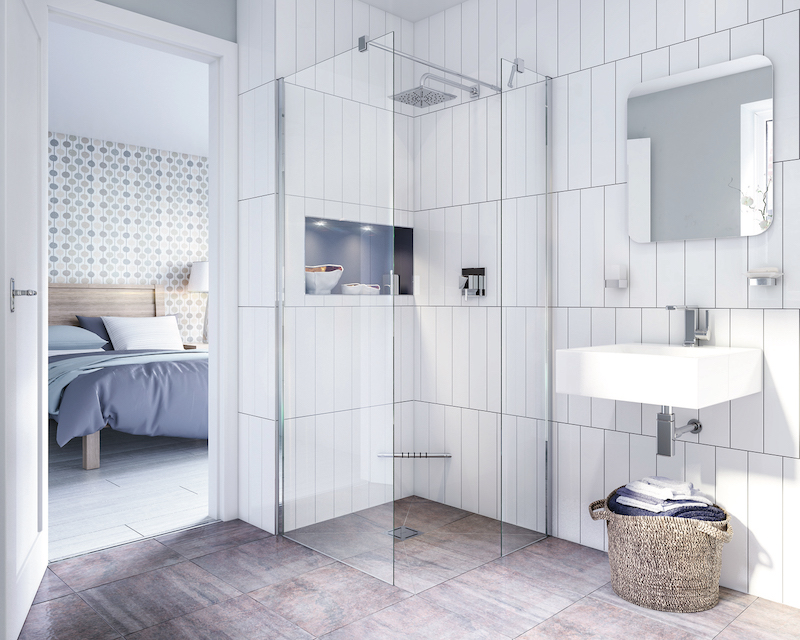
As many customers have preconceived ideas of wetrooms, Richard Coles, Showrooms Business Development Manager at Plumbase, suggests how installers can respond to some of the most common misconceptions.
Despite the rising popularity of wetrooms, installers are often tasked with addressing homeowners’ unfounded concerns surrounding this type of installation.
Wetrooms will leak
One of the most common misunderstandings about wet-rooms is that when fitted upstairs, water will leak through the ceiling due to a lack of a traditional shower tray. It goes without saying that leaks are a common concern for both installers and their customers, but a correctly fitted wetroom will not leak, regardless of whether installed on a ground floor or upstairs.
We’ve all heard horror stories of water-damaged floors and ceilings, but this is easily avoided by ensuring that the waterproofing (tanking) of the wetroom is completed correctly. This is achieved by installing a membrane across the whole showering area including the floor, walls, and any junctions that may come into contact with water. Products such as Impey WaterGuard feature a fleece membrane with a self-adhesive butyl rubber backing, making it quick and easy to install, and guaranteed for life to prevent leaks.
Wetrooms are difficult to install
Installing a wet room in a family bathroom might feel like a difficult task for an installer, but with correct planning and creating a gradient for drainage, the job in hand can be easily managed.
The most practical way to create a level-access wetroom shower space is by using a wetroom floor former which is specifically designed to sit directly on top of the floor joists, flush with the floor. Wetroom floor formers have an in-built gradient to channel water directly to the drainage point. Strong, load-bearing wetroom floor formers, designed to be tiled over, are now widely available.
While the use of a traditional shower tray is familiar territory for installers, it’s important to remember that some wetroom floor formers will need to be repositioned to suit the joists on the floor unless they feature a rotating drain plate than can be repositioned to avoid joists and other under-floor obstructions, saving valuable time.
Wetrooms are unattractive
When discussing wetrooms, many people automatically think of a space that is built for function rather than aesthetics. However, thanks to the demand for stylish, spa-like bathrooms, manufacturers are now creating wetroom furniture and fittings that are both attractive and functional, so homeowners no longer need to compromise on style if they install a wetroom.
Installers now have access to an extensive range of modern wetroom accessories, allowing them to meet the design briefs of their customers who want a practical wetroom with a contemporary feel. Even functional products, such as handrails or shower seats, are being designed with visual appeal in mind and can seamlessly complement an existing bathroom design.
Wetrooms can only be installed in large bathrooms
Contrary to popular belief, there is no maximum or minimum size for a wetroom. In fact, wetrooms can be ideal for small bathrooms as installers can make the most of awkwardly-shaped rooms that can’t accommodate a traditional shower unit. Conventional shower trays, for example, can be bulky and will only fit into specific spaces, which is where a wetroom offers a great alternative in a smaller room, such as an en-suite or loft conversion.
A wetroom screen offers the ideal solution to isolate a wetroom space. The showering area remains spacious and the screen will ensure towels and the rest of the bathroom stay dry and free from any water spray.
No matter how popular wetrooms are, homeowners will always have queries regarding the installation of one in their property. Learning about the common misconceptions surrounding wetrooms, and how to dispel these myths, ensures that installers are confident to recommend a wetroom and can give peace of mind to customers that their bathroom will be both functional and beautiful.