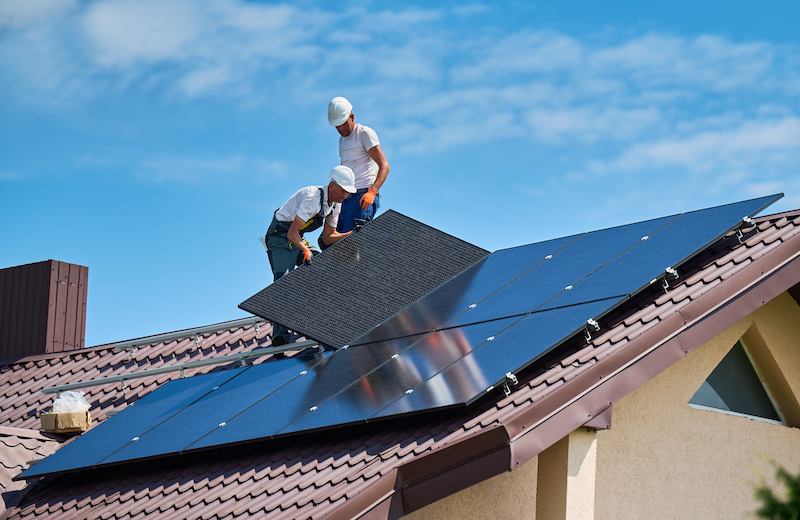
Following two years of development, the government has unveiled its £15 billion Warm Homes Plan, aimed at reducing energy bills and upgrading millions of UK homes with low-carbon technologies and insulation measures.
Homeowners will be able to access low and zero-interest loans for solar panels, batteries, and heat pumps, while low-income and fuel-poor households will receive fully funded upgrades backed by £5 billion of public investment.
The government says it wants to create a “rooftop revolution”, tripling the number of homes with solar installations. While heat pump installations are expected to rise under the plan, the government is now working towards an annual installation rate of around 450,000 by the end of the decade, well below earlier ambitions of 600,000 a year by 2028.
The Plan confirms an extension of the Boiler Upgrade Scheme through 2029/30, maintaining £7,500 grants for households switching from gas boilers to heat pumps. While these incentives remain in place, the government has not set a formal phase-out date for gas boilers.
The programme is designed to give households flexibility to adopt clean energy technologies on their own terms. Government-backed loans will make it easier for all homes to access solar panels, batteries, and heat pumps, while new rules will encourage landlords to invest in energy efficiency improvements for private and social tenants. By 2030, the plan aims to triple the number of homes with solar panels and expand access to heat pumps, including the first government-backed scheme for air-to-air units capable of both heating and cooling homes.
Protections for renters have also been strengthened. New regulations will require landlords to ensure homes are safe, warm, and energy efficient. It is estimated that half a million families could be lifted out of fuel poverty over the next decade through these reforms.
The government describes the Warm Homes Plan as the most ambitious domestic energy programme in the UK, combining targeted support for the most vulnerable households with broader financial measures to accelerate the uptake of low-carbon technologies and improve warmth and comfort across the housing stock.
Stakeholders have broadly welcomed the plan, saying that while government incentives for low-carbon measures are welcome and can reduce upfront costs, their long-term effectiveness depends on lowering electricity prices, improving affordability and expanding support – particularly for commercial buildings and diverse housing types. Here is a round-up of views across the industry:
Bill Esterson, chair of the Commons Energy Security and Net Zero Committee:
“It is good to see the government supporting people, especially low-income families, to buy into technological solutions like heat pumps and solar panels. But we must remember that beyond those upfront costs, it’s still cutting the price of electricity and closing the gap with gas that will make this work.
“In the meantime, notwithstanding the concerns about botched cavity wall insulation schemes, loft insulation is still a cheap, easy way to warm your home and cut your bills. We need to ensure we have trained, trusted fitters across the country with the confidence to take part in the Warm Homes Plan after the scandal of ECO. Insulating homes for warmth and reduced energy demand was the right idea before, and it’s still the right idea.”
Russell Dean, deputy divisional manager at Mitsubishi Electric:
“The plan to offer interest-free loans for heat pumps is a welcome step to further reduce upfront costs, and the continuation of the Boiler Upgrade Scheme shows that the government is serious about making heat pumps a realistic option for more of us. However, the disproportionate cost of electricity still remains a roadblock for the uptake of renewable heating in the UK.
“Whilst the plan offers much for households and domestic properties, support for businesses and commercial buildings remains extremely limited. The commercial sector continues to be held back by little to no governmental, regulatory, or legislative incentive to decarbonise. The lack of commercial focus signifies a missed opportunity to tackle the UK’s approximately 2 million non-domestic buildings, and any genuinely transformative action plan must address this.”
Greg Jackson, founder of Octopus Energy:
“Electrifying homes is the best way to cut bills for good and escape the yoyo of fossil fuel costs. Solar panels can slash energy costs – and paired with a battery we get the electricity when we need it. Heat pumps can be cheaper to run, and with solar they’re often dramatically cheaper. With the right finance, simpler rules and a big push from manufacturers, heat pumps will increasingly be the best solution for many homes – as they are in other countries like Sweden, Norway and Finland.
“We still need to focus on getting electricity costs lower for everyone, building on the changes in the budget, but this plan sends a clear signal that the future of home heating is electric.”
EUA chief executive Mike Foster:
“Our experience of more than a decade of subsidising heat pumps in existing homes shows that uptake is likely to remain limited until installation becomes more affordable and running costs decrease. Where we see real potential for lowering energy bills and cutting carbon emissions is in hybrid heating technologies. Aligning solutions with the realities of the UK’s diverse housing stock is the most pragmatic path forward.”
HPA chief executive Charlotte Lee:
“Whilst the plan sets out a clear vision and spending allocation to support the decarbonisation of homes, it is disappointing and a missed opportunity not to see the same for the decarbonisation of Commercial and Public Sector buildings or confirmation of further action to tackle the high price of electricity relative to gas. We urge the government to consult and take action to unlock meaningful progress in these areas.
“The sector now eagerly awaits the publication of the Future Homes and Buildings Standard Regulations, which are essential to underpin demand in the market and unlock positive investment decisions in the manufacturing and installation of heat pumps.”
Madeleine Gabriel, director of sustainable future at Nesta:
“Solar panels and batteries are smart choices for people looking to cut their bills, and heat pumps also ensure people can enjoy a more comfortable, consistently warm home. Today’s announcements provide a clear path to helping millions more families reap the rewards of low-carbon home upgrades, whatever their financial situation and whether they own or rent their home.
“We now look forward to seeing the UK government, local authorities and industry work collaboratively to deliver the Warm Homes Plan in practice, ensuring households across the country benefit from warm homes and lower bills.”
Gemma Grimes, director of policy and delivery at Solar Energy UK:
“Installing solar panels can slash hundreds of pounds off household energy bills each year, especially when combined with a battery energy storage system and a heat pump. With the loans and grants provided through the Warm Homes Plan, a huge proportion of the UK population will share the benefits. Almost two million smaller-scale installations have been made already, on homes and businesses – the industry stands ready and able to build millions more by 2030.”
Link to Warm Homes Plan: https://assets.publishing.service.gov.uk/warm-homes-plan-standard-print.pdf