Homeowners are more likely to plan ahead for replacing older boilers when messaging focuses on financial support and avoiding last-minute disruption, according to new research from consumer group Which?.
The study surveyed 1,190 UK homeowners in October of last year who had responsibility for their heating systems.
Data showed that three in four homeowners with older boilers (over eight years old) had no plans for replacing their boiler. Six in 10 (60%) said they service their older system annually, which may reassure them that any issues will be addressed. However, even amongst those homeowners whose boilers were showing signs of wear and tear, more than half (53%) had not made any plans for its replacement. A quarter (27%) say they will just ‘wait and see.’
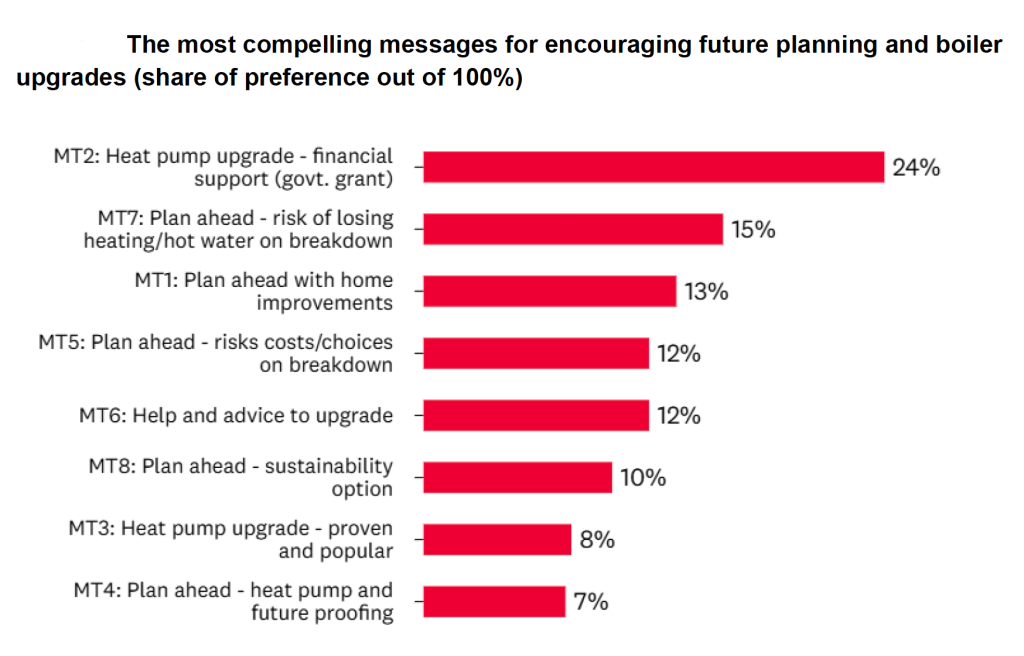
To better understand what might encourage homeowners to act sooner, Which? looked at the types of messaging most effective in prompting advance planning. The three themes that were most effective in engaging homeowners were::
-
-
Messages that reduced immediate barriers such as cost – “Government grants and loans could make upgrading your boiler to a heat pump more affordable”
-
Messages that highlighted tangible risks of delay, like losing heating or hot water – “Planning ahead for your next heating system means you won’t be left without heating or hot water when it matters most”
-
Messages that framed planning as a practical, manageable step – “Planning ahead your boiler replacement means it can be done when convenient to you or alongside other major works”
-
The research found that combining the first two messages above – information about financial support and avoiding the disruption of a last-minute replacement – was the best way to engage the most homeowners, reaching around 85%. Without financial support messaging, highlighting the risks of delay alongside practical planning advice and the potential for more sustainable heating still engaged a substantial number of homeowners, around 73%. Families were particularly motivated by messages stressing costs and limited options in emergency situations.
Homeowners often experience stress and inconvenience when boiler replacements are delayed until an emergency. Emphasising the practical benefits of planning, such as scheduling replacements at convenient times, further encouraged proactive behaviour. Planning ahead also gives homeowners the time to consider alternatives to traditional gas boilers and make arrangements for switching to electric or low-carbon heating where appropriate.
Which? is calling on governments and companies to:
● Support initiatives that enable targeted engagement with homeowners at key decision points, for example homeowners with older boilers who are approaching the point where they will need to replace their boiler.
● Use regular communications to encourage early planning for boiler replacement, helping homeowners avoid last-minute distress purchases and creating a natural opportunity to consider electric heating.
● Focus messaging on what matters most to homeowners. Our research suggests that affordability, reduced disruption, and convenience, are the themes that are most likely to drive engagement.
● Provide accessible information and advice to support decision making. Linking to independent sources of advice can increase consumer confidence and support informed decisions.
The research, supported in part by the MCS Foundation, provides insights into how messaging strategies can influence homeowner behaviour and potentially ease the shift towards low-carbon heating, while reducing the disruption and stress associated with emergency boiler replacements.
Jenny King, head of home energy at Which?, says:
“Last-minute boiler breakdowns and emergency call-outs create unnecessary stress for homeowners and put extra pressure on installers, particularly during the busiest times of year. Installers are often the only professionals homeowners discuss their heating plans with, which makes it especially important that the right messages reach homeowners at the right moment, whether through installers or other trusted information sources.
“Our new research provides useful guidance for government and installers by explaining which messages are most likely to resonate with homeowners and encourage them to plan ahead. By focusing on affordability, avoiding disruption and making replacement feel manageable, government and industry can help reduce stress, spread demand more evenly and give homeowners the time they need to consider low-carbon heating options.”
The report concludes:
“Encouraging homeowners to plan ahead for the replacement of an older boiler has the potential to significantly reduce the stress and inconvenience associated with last-minute purchases. More importantly, as the transition away from gas and oil heating accelerates, early engagement gives homeowners the opportunity to consider low-carbon alternatives such as heat pumps. While this may not yet be the right option for all households, it will become an increasingly relevant consideration for more households.“
Which? also provide a Home Energy Planning Service which gives homeowners personalised advice on how to make their home more energy-efficient, including potential improvements, costs, savings, and available grants: Home Energy Planning Service