Greg Banham, commercial director for Navien UK, explains how upgrading Belfast City Hall’s ageing hot water system delivered improved efficiency, performance and space utilisation, demonstrating how modern tankless solutions can meet the evolving demands of busy commercial venues.
In many hotels, civic buildings, leisure centres, and catering venues across the UK, existing hot water systems can begin to show their age – not only in energy consumption and maintenance requirements, but also in space efficiency and long-term resilience. As a result, forward-looking customers are reviewing alternative approaches alongside more traditional systems, presenting a growing opportunity for installers, provided the chosen solution aligns with the demands of modern commercial use.
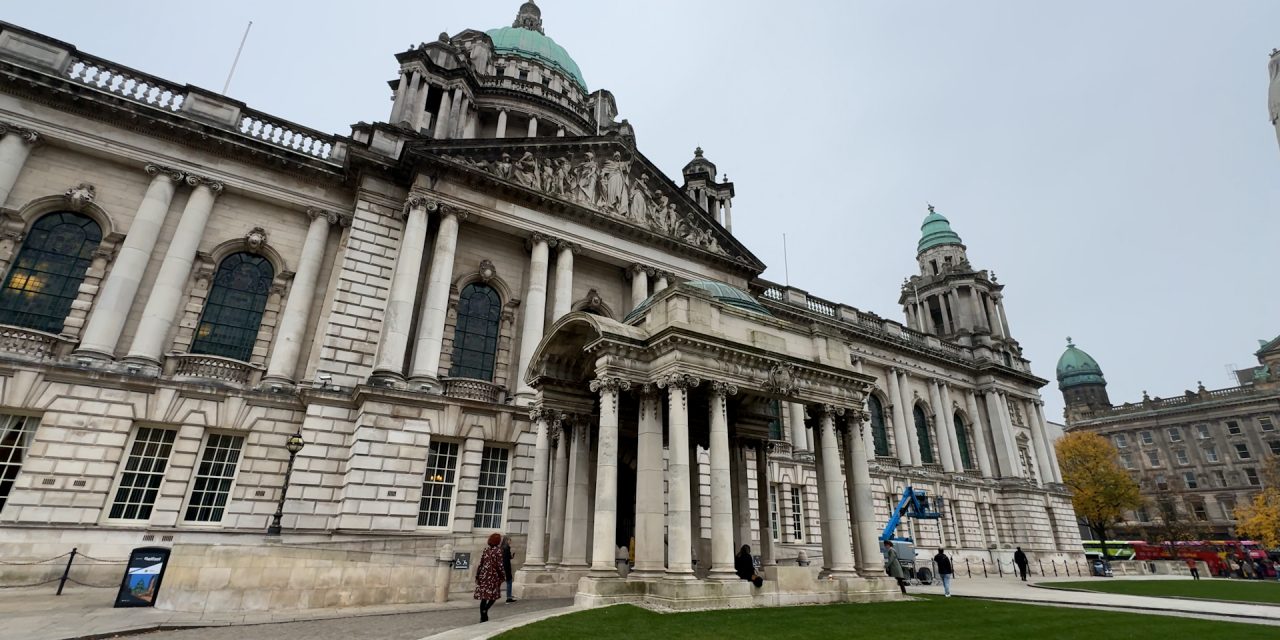
A recent example of such a customer is Belfast City Hall, an iconic landmark which has stood strong in the centre of Belfast city since the early 20th century. As the main venue in Belfast city centre for weddings and registrations, the kitchen for its Grand Hall –which supports high-volume banquets and formal events – had been operating with floor-standing storage heaters. Over time, these units developed pinhole leaks and were no longer economically viable to repair. Their location within a constrained plant room made removal particularly challenging, while the operational demands of the bustling kitchen meant any replacement needed to deliver high output, consistent performance and a practical installation solution within limited space.
After assessing factors such as output, scalability, installation access and long-term maintainability, the decision was made to install Navien UK’s NPE-24SWE tankless water heating units. Greg Banham, Commercial Director for Navien UK, explains how the outcome not only addressed the immediate issues, but also reshaped the building’s hot water strategy, introducing a more modern, efficient and future-ready approach.
The industry case for tankless systems
While the Belfast City Hall project provides a clear illustration, interest in tankless water heating systems reflects wider trends across UK and European commercial and multi-occupancy buildings. Rather than replacing all existing solutions, tankless technology is increasingly being considered where space, demand variability and energy efficiency are key drivers.
Tankless water heaters – sometimes referred to as instantaneous or on-demand systems – heat water as required, rather than storing and maintaining large volumes at a temperature. In applications with fluctuating or intermittent demand, this can help reduce energy used during periods of low or no usage.
According to the Energy Saving Trust, instantaneous water heating systems can be more energy efficient than traditional storage-based solutions because they eliminate standby heat losses associated with keeping large volumes of water hot. Industry estimates suggest that, when correctly specified and applied in suitable commercial environments, this approach can contribute to energy savings in the region of 15 – 30%, depending on usage patterns and demand profiles. In a market where energy prices and efficiency targets remain under scrutiny, this can be an attractive consideration for building operators reviewing long-term running costs.
Beyond operational efficiency, tankless systems can offer long-term value in appropriate settings. Installers and specifiers often cite simplified maintenance, extended service life and reduced risk of leaks associated with large storage vessels. For public-sector and commercial buildings, where reliability and uptime are critical, these factors increasingly influence specification decisions.
Space efficiency is another important consideration. Traditional storage heaters can require a significant plant room footprint, whereas tankless units are typically compact and wall-mounted. This makes them particularly well-suited to retrofit projects, heritage buildings and sites where plant space is limited or shared with other services.
Taken together, these characteristics mean tankless water heaters are becoming a compelling option for many modern installations – particularly those with variable demand, limited space or a focus on long-term efficiency.
The Belfast City Hall example
At Belfast City Hall, installers encountered a scenario familiar across the commercial sector: ageing equipment, restricted access and the need to maintain operational continuity. The existing floor-standing heaters were beyond economic repair, and their removal required careful planning to avoid disruption.
The installation of the Navien NPE-24SWE units addressed these challenges on several fronts. By delivering hot water on demand, the system removed the need to heat and store large volumes of water overnight, reducing unnecessary energy use. The compact form factor and relatively light weight of the units also allowed installers to manoeuvre them through restricted access points and complete installation efficiently.
Crucially, output and scalability were central to the specification. The kitchen’s hot water demand varies depending on the size and nature of events. The NPE-24SWE’s ability to deliver high output and operate in cascade ensures capacity can be matched to demand without oversizing the system at the outset. This approach supports both efficiency and future flexibility.
Following installation, Belfast City Hall reported immediate delivery of 60°C hot water at point of use, consistent performance during peak demand and the removal of the daily energy requirement associated with heating a cold-water cylinder each morning. The additional plant room space created has also simplified access for future maintenance. As a result, Belfast City Council is now exploring the wider use of similar solutions across other sites.
For installers, the project highlights the importance of matching system design to real-world usage, combining flow rate, cascade capability, footprint and fuel flexibility to deliver a robust, future-proof solution.
What installers should consider
While tankless systems offer clear advantages in many applications, they are not a universal solution. Correct sizing remains essential, as underspecification can affect performance during peak demand. Installers must also carefully assess expected flow rates, simultaneous usage and peak draw scenarios, and in larger commercial environments, cascade configurations may be required to ensure a reliable supply. For instance, the NPE-24SWE can cascade up to 16 units for increased hot water production.
Fuel supply, venting and flue arrangements also need careful consideration, particularly in retrofit projects where existing infrastructure may need adjustment. Ongoing maintenance remains important too; while tankless systems avoid issues associated with stored water, periodic servicing and descaling are essential to maintain efficiency and performance over time.
When specified and installed correctly, however, tankless water heaters can deliver a strong balance of efficiency, reliability and flexibility, making them a valuable option within the installer’s toolkit.
What this means for the UK installer market
The growing interest in tankless hot water systems reflects wider shifts across the UK construction and building services sector. Rising energy costs, evolving efficiency standards and the need to maximise usable space are all influencing how hot water systems are specified. As more commercial and heritage buildings are refurbished or upgraded, installers who understand a range of technologies – and when to apply them – will be well positioned to support customers effectively.
In the case of Belfast City Hall, adopting a compact, cascade-capable tankless solution delivered immediate operational benefits and long-term flexibility. For installers, the key takeaway is not that one technology fits all, but that selecting the right system for the right application can make a measurable difference.
At Navien UK, we continue to support installers and specifiers with a broad portfolio of heating and hot water solutions, alongside guidance to help ensure systems are correctly matched to building requirements. Ultimately, it is careful specification, quality installation and a clear understanding of real-world demand that underpin long-term performance.
To watch the full story, visit: https://www.youtube.com/watch?v=VNk6CBmsgR0
And to find out more about Navien’s NPE-24SWE tankless water heater, go to: https://navien.co.uk/product/npe-water-heater/