
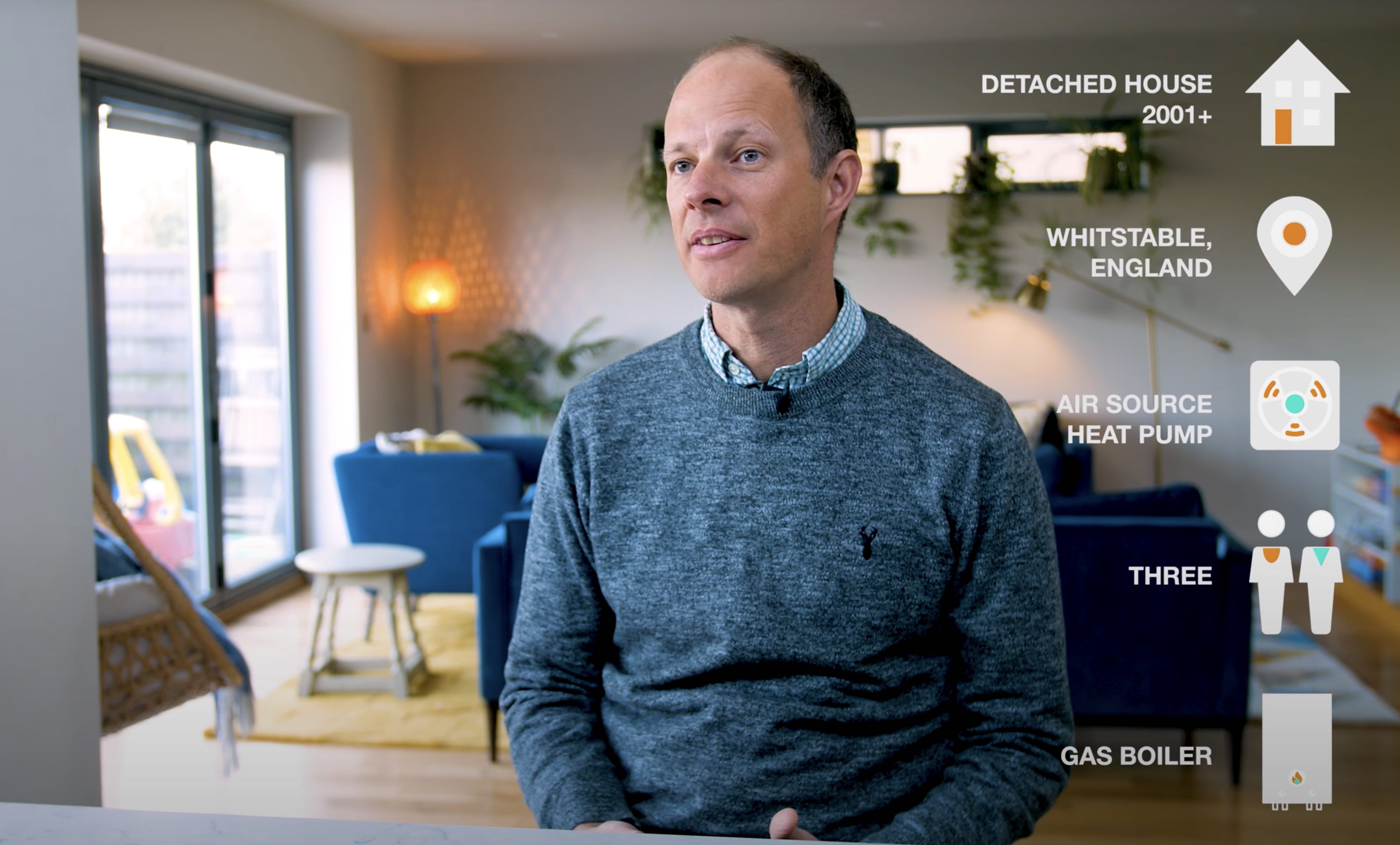
A new study funded by the Department for Business, Energy and Industrial Strategy (BEIS) has concluded that there is no property type that is unsuitable for a heat pump. However, scaling the roll out of heat pumps across the UK will require cross-sector innovation to overcome the challenges to adoption, including upfront costs and disruption during installation
The ‘Electrification of Heat’ demonstration project has been set up to better understand the technical and practical feasibility, and constraints of a mass roll out of heat pumps into British homes. Warmworks, E.ON, and OVO Energy, were appointed as the delivery contractors in the South East of Scotland, North East of England, and the South East of England respectively, with the objective of installing around 750 heat pumps. Energy Systems Catapult; the Net Zero Innovation Centre, was appointed to lead the management contractor consortium.
The project received 8807 expressions of interest from households who cited sustainability and low carbon heating (78%) and interest in new technology (63%) as the most common reasons for wanting to participate. In total, 742 heat pumps were installed in a broad spectrum of housing types, to reflect a representative sample of households around the country.
The study was able to demonstrate that energy efficiency upgrades are not always necessary to install a heat pump. For instance, energy efficiency upgrades were only made for 15% of properties where a heat pump was installed – in most cases this was loft insulation. The majority of homes where a heat pump was installed had an Energy Performance Certificate rating of C or D.
A lack of external space for an outdoor unit was cited in 8% of cases where a heat pump was not recommended, with 2% lacking the internal space for a thermal store such as a hot water tank or larger radiators. For 4% of properties assessed the cost of installation and/or additional measures such as insulation, meant that effective installation of a heat pump was deemed too expensive to proceed with.
The main barrier reported by participants to progressing to a heat pump installation was the disruption of having the heat pump installed. This was reported by 47% of participants who decided not to proceed with a heat pump installation.
Guy Newey, CEO at Energy Systems Catapult, comments:
“The Electrification of Heat Demonstration Project is providing crucial insights to help industry better understand how to scale-up heat pump adoption across Britain to meet the government’s ambitious target of 600,000 installations per year by 2028.
“To reach the target, we will need to innovate to make switching to a heat pump as smooth a journey as possible for consumers; to drive down the costs of installation; and to provide a much better consumer-heating experience.
“From our own work, we feel this will require the sector to translate complexity into digestible, consumer-friendly offers – such as bundling net zero products like heat pumps into energy tariffs – to help customers to retrofit their homes. Any low carbon heating solution needs to be as good, or better than, the alternatives if we are to go at the scale and pace we need for our net zero targets.
“We are already seeing incredible innovations from some of Britain’s most exciting companies – both from inside the trial and outside. Innovations in new technologies and methods of heat pump manufacture, new installation techniques and digital controls, and new business models. Together these innovations – within a reformed policy environment that incentivises low carbon choices – could help transform the sector, delivering thousands of new jobs. The government also has a role to play in driving forward innovation in the market.”
The latest two reports (Participant Recruitment, together with Home Surveys and Installation) examine data released by Energy Systems Catapult.
The Participant Recruitment report concludes that creating a seamless customer journey will be necessary to advance the adoption of heat pumps and there are several recommendations made designed to enhance customer engagement, including:
- Providing customers with an overview of the design and installation journey at the outset can allay their concerns and establish buy-in to the process.
- Providing a digestible summary of the facts and assumptions about their property.
- Ensuring access to dedicated customer support staff is provided to drive support and further the positive relationship between consumer and industry.
The Home Surveys and Installation report found that the sector has an opportunity to improve the delivery and consistency of the installation supply chain. This could be achieved by:
- Conducting a review of the design and installation requirements and guidance as well as the installer certification process such that it ensures high quality installations and increases consumer confidence in the industry.
- Offering support and training for domestic heat pump system designers and installers.
- Standardising the heating system design tools to ensure a consistent design standard.
To read the Participant Recruitment report, click here. To read the Home Surveys and Installation report, click here.
