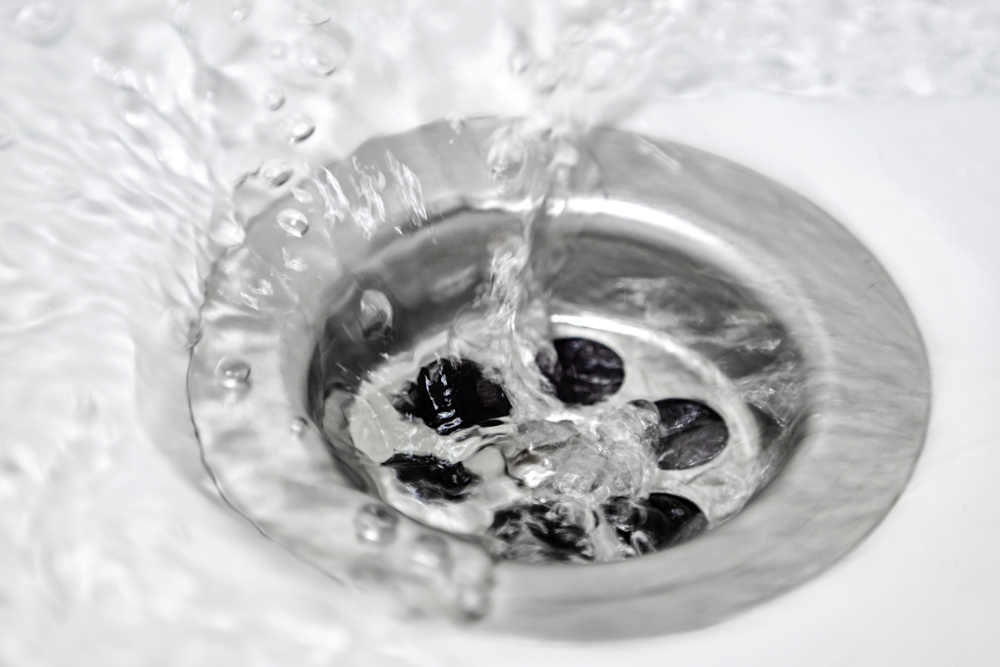
Industry groups have expressed concern that the UK government’s ‘Integrated Plan for Water’ could lead to an increase in water consumption, rather than a reduction.
Unveiled earlier this month by Environment Secretary Thérèse Coffey, the Plan aims to reduce household water consumption from 142 litres per person to 110 litres per person through the development of minimum product standards for water efficiency, which could potentially lead to bans on power showers and dual flush toilets.
The Bathroom Manufacturers Association (BMA), British Institute of KBB Installation (BIKBBI), British Toilet Association (BTA) and Unified Water Label Association (UWLA) have criticised Defra’s proposed measures aimed at cutting back water consumption, saying that such bans could result in unintended higher water use and stifle innovation.
They also criticise the government’s proposed mandatory water efficiency label, arguing that an existing industry-led scheme would be more effective and cost-efficient.
Tom Reynolds, chief executive of the BMA, representing suppliers of fixtures and fittings, is unhappy with the proposals. “Manufacturers are innovating ever-more efficient brassware products and leak-proof toilet systems. Bans on specific product ranges will stunt this innovation, as manufacturers must redirect their budgets away from R&D. We know that any ban could result in unintended higher water use; a ban will tempt consumers to tamper with fittings to increase flow or may spend longer under the shower.”
The BTA’s chief executive, Raymond Martin, has already discussed the proposed ban on dual flush toilets. “Well-maintained dual-flush toilets don’t leak,” he says. “When you have a limescale build-up, the seal can become interrupted and cause a trickle into the pan, but that’s true even of single flush toilets. The introduction of dual-flush toilets was to reduce the amount of water used to wash away urine and has been highly successful. They are a water-saving device, so if they need to be improved to engineer out leaks, government should work with the industry, not simply ban dual-flush outright.”
BIKBBI says Defra’s approach to regulating water fittings in the same way as electrical appliances, with ‘minimum efficiency standards’, is ill-advised. “You can have such standards on electrical products because you know you’ll be getting 240 volts out of the socket from your energy supplier,” says the Institute’s chief executive, Damian Walters. “As any installer will tell you, water is very different, with pressure varying widely from area to area. You can’t, therefore, say a single fitting will have the same performance in every home. Higher flow fittings are often selected to compensate for poor pressure.”
The Plan for Water also indicates Defra will push ahead with its proposal to develop a mandatory UK water efficiency label, another point of contention with the industry. The plumbing sector already has the Unified Water Label. Manufacturers use it in product brochures, and retailers like Ikea display it in stores and online.
Reynolds believes that Defra can use what already exists: “We already have a very well-established labelling system, and if government wants to make this mandatory, we’d be very supportive. However, they seem to want to reinvent the wheel, meaning ubiquitous water labelling will take longer and be much more costly to the taxpayer.”
Yvonne Orgill, MD of the UWLA, agrees: “These proposals will adversely restrict the market, and without education and a robust audit system, they will fail. Government is misguided in spending time and money developing a label when there is a recognised and existing scheme developed by the industry that they could utilise, at much less cost and more effectively.”