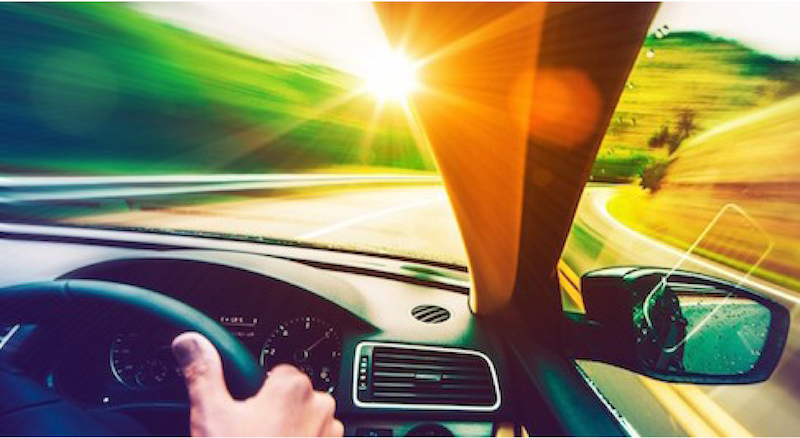
New research carried out by Confused.com – in collaboration with skin cancer charity Melanoma UK – shows many drivers do not fully understand the potential harm that can be caused by the sun while they are at the wheel.
For example, almost half of motorists (49%) are not aware they are still susceptible to sun damage in the car even if they have their windows closed.
Meanwhile, one in every five – 20% – admit they have previous experience of getting sunburned while driving. Almost the same proportion (19%) say they have never applied sunscreen while on the road during the summer months. 15% of motorists say they deliberately put their arm out of the side window in order to get a tan – sometimes referred to as ‘white van tan’.
Harmful sun rays can pass through glass
Melanoma UK spokesman Dr Christian Aldridge points out that it is a popular misconception that glass can completely protect individuals from ultraviolet radiation. He comments:
These harmful sun rays can still pass through closed car windows, putting motorists at risk of asymmetrical sun damage.
“For years, dermatologists have observed that patients in the US, where left-hand-drive cars are the norm, often have more sun damage on the left side of their faces than on the right, which can lead to wrinkles, leathering, sagging, brown age spots and even skin cancers.
“One study showed the side of the body next to the window received up to six times the dose of UV radiation compared to the shaded side.”
There are two types of ultraviolet radiation from the sun – UVA and UVB.
While clear vehicle windows can block almost all UVB radiation – the type which is absorbed by the top layer of skin and which is most commonly associated with sunburn – they are much less effective against UVA rays. This kind of radiation can penetrate more deeply into the skin, leading to a loss of elasticity and potentially also premature signs of ageing.
When buying sunscreen, the sun protection factor (SPF) is primarily a measure of its ability to block UVB rays and prevent sunburn.
However, sunscreens also have a star rating, between one and five, which relates to their protection levels against UVA rays. Motoring experts recommend choosing a product that offers high levels of protection against both UVA and UVB radiation.
Amanda Stretton, Motoring Editor at Confused.com, says:
Our experiment highlights how important it is to apply sun cream in this weather, especially if you’re a frequent or commercial driver. With one in five drivers having suffered with sunburn while travelling in the car, applying sunscreen before jumping behind the wheel is just as important as if you are sunbathing.”