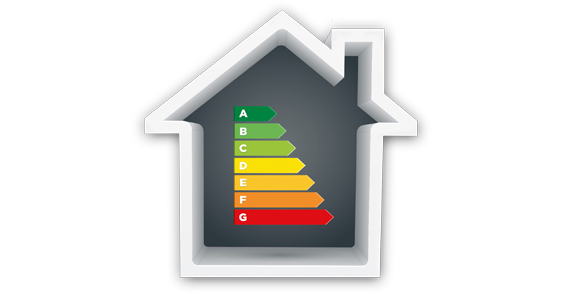
Chris Flaherty, owner of Vietec Heating, takes a look at the ErP and considers what system efficiency really means.
We now have ErP and from what I have seen so far, nothing has changed, as we all knew it wouldn’t, but reading through trade magazines, manufacturers are banging on about their boilers and ErP and to use their controls to achieve A+. This is all nonsense, as I pointed out in a previous blog on ErP, and is making some installers believe that by simply installing these products they are giving the end user an efficient system, just because a label says so. Well, it does not. There is far more to creating an efficient system and I think boiler manufacturers are misleading by suggesting their boiler with their control will achieve optimum efficiency. They are taking a far too simplistic view.
What we need to remember about boiler efficiency, for example a boiler with an efficiency of 95%, is this that efficiency was found under test conditions in a laboratory, with NO reflection of the reality of a heating system in a home. Now, I am not against the tests, as all boilers have the same test conditions – it is a fair way to show the boiler’s potential efficiency.
When we buy a boiler to install and it has a tested efficiency of 95%, it is down to us to try and maximise this efficiency, but it will be unlikely we will achieve the full efficiency. This will be down to installation constraints and homeowners’ desires. We will have to sacrifice some of the boiler’s efficiency to fulfill these constraints. Some of the constraints are:
o Type of heat emitter used – are we installing new or connecting to existing?
o Controls
o Customer’s required room temperature
o Boiler flow temperature
Now, if you are connecting to existing radiators, you are assuming that these radiators were initially correctly sized for the room heat loss. To get the most efficiency out of the boiler, we need to have as low a flow temperature as we can. This ensures we have a return temperature below the dew point to maximise condensation and so drive up the efficiency. Most radiators fitted years ago tended to be over sized, plus the boiler is often oversized, so don’t just replace like-for-like with boilers. Always check. Most homes these days have added double glazing and quite likely would have higher levels loft insulation than when the heating was first installed, reducing the heat loss of the building thermal envelope. This can allow a lower flow temperature to the radiators but still cover the room heat loss – but without full calculations, this will just be an assumption.
If you are installing new, then you can size the radiators for low temperature, which will drive up the boiler efficiency, or you may be able to install UFH, which allows even lower temperatures to really get the most out of the boiler for UFH. My preference is to run the boiler at the correct flow temperature for the UFH, 30-50ºC depending on floor coverings, rather than heat to 65-70ºC and then blend it down at the manifold. Why do this? Well that is my personal opinion anyways.
We then have the customers’ requirements: When do they want the heating to operate? What temperatures do they want the rooms to achieve? If they want the living areas at 24ºC, the system will not be as efficient. We as installers can only advise – the customer gets what they want.
We then need to determine the best controls for the system. Does the property need to be zoned? Do they require access via their phones, or do they prefer a standard dial thermostat? Again, we can only advise on what we believe is best for efficiency, but the customer has to use the controls, so it has to be something that suits them, not us.
The system needs to be commissioned correctly. This not only means commissioning the boiler to the manufacturer’s instructions, but also ensuring that the controls work correctly. Ensure that the system is correctly balanced to give the require delta T across the radiators – an unbalanced system will effect the system efficiency.
We also need to ensure good deaeration. Simply filling and venting the rads, then turning the system on and checking the radiators are warm, then off we go, is not good enough.
Correct deaeration is one of the most important things for system longevity. Ensure good quality automatic air vents are used, but remember these are just for filling and draining, so once the system is fully deaerated they should be closed, as they can ingress air into the system on cooling. It’s also a good idea to install a good quality micro air bubble remover at the hottest part of the system, something like a Spirovent RV2. You also need to take the system temperature up to a high temperature, even for underfloor heating. This releases the gasses from the water which can then be vented off, ensuring that the system is gas-free and allows correct pH.
So in the real world to get an efficient heating system is more than just an ErP rated boiler, using their specified controls to get a piece of paper that says A+. We have to look at the whole system; the boiler does not just sit there on its own – it’s connected to a distribution system which is connected to heat emitters. True efficiency comes from the system and not just the boiler and control. Many factors will create the system efficiency or inefficiency. The blinkered view of ErP that the boiler and controls are the main factor to system efficiency is wrong in my opinion and will lead to consumer complaints.