Underfloor heating is rapidly moving into the mainstream, driven by efficiency demands and low-carbon regulation. For installers, it offers a major opportunity to deliver cleaner, smarter, future-proof heating, says Ben Perris at Wavin.
As new regulations drive down carbon emissions and homeowners demand efficient, future-proof solutions, underfloor heating (UFH) is moving firmly into the mainstream. For installers, this shift represents a major opportunity: to deliver high-performance, energy-efficient heating that’s simpler to install, reliable to maintain, and compatible with modern low-carbon systems.
Modern heating systems must now do more with less – less energy, less carbon and less space. That’s where low-profile UFH systems come in. It’s no longer enough to think of UFH as a ‘luxury add-on’; it’s becoming the logical choice for both new-build and retrofit applications.
For installers, this evolution opens the door to new opportunities. It’s a chance to guide homeowners confidently, recommending UFH as a practical, future-proof and cost-effective heating solution.
Compelling performance
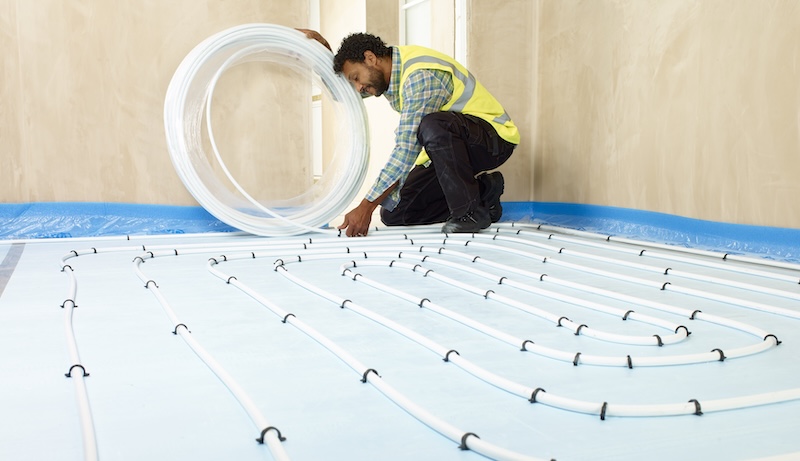
For installers, UFH offers clear, practical advantages that go beyond end-user comfort. With pipework integrated beneath the floor, the system creates a streamlined setup with fewer visible components, reducing time spent on mounting, surface prep, and follow-up maintenance – helping jobs run more efficiently from start to finish. The low-profile design also simplifies planning and layout considerations, particularly in open-plan areas or rooms with built-in storage, since installers don’t need to work around bulky wall-mounted units.
Beyond installation, UFH benefits from turning the surface area of the floor into a heat source. This creates even heat distribution across the entire room, eliminating cold spots and creating a more stable and consistent indoor climate – ideal for today’s open-plan layouts where traditional systems can struggle to heat evenly.
Unlike traditional radiators, which heat a single area, UFH can also be split into zones, allowing each room or area to maintain its own temperature. Systems like Wavin’s Sentio make zoning effortless, with simple installation, logical configuration, and app-based controls, so installers can be confident homeowners can manage heating room by room – even remotely.
Cost-effective
One of the biggest advantages of UFH lies in how efficiently it uses energy. Operating at low temperatures of around 35-45°C – compared with the 60-75°C needed to heat traditional radiators – UFH makes the most of every unit of heat produced.
When paired with a low-carbon heating solution such as heat pumps, a study conducted by Wavin found that homes can improve energy efficiency by reducing energy consumption from 10 to 20% – meaning homeowners can cut their bills significantly while reducing their carbon footprint. However, even when paired with traditional boiler systems, the even, radiant warmth of UFH allows thermostats to be set a few degrees lower without sacrificing comfort – a small change that can deliver noticeable savings over time.
For installers, this combination of comfort and efficiency makes UFH an easy recommendation, delivering a system that meets regulatory standards and enhances homeowner satisfaction.
Retrofit-friendly
Traditionally, fitting UFH in existing properties has been seen as challenging or potentially disruptive. Retrofitting often means working within fixed floor heights and existing finishes, often limiting space for insulation or pipework. These difficulties are even greater in upstairs rooms, where installers must account for floor load, build-up height and access restrictions.
Today however, manufacturers are doing more than ever to help make installation simpler, faster and less invasive. Advances in system design have created lightweight, low-profile options that allow installers to work efficiently, even within the constraints of older homes.
Wavin’s Warm Deck is one such innovation. It’s engineered to deliver all the comfort and efficiency benefits of UFH without the need for any major structural work. Its lightweight design and straightforward installation process help installers save valuable time on site, simplify project planning and reduce the overall complexity often associated with retrofit applications.
To support the trade even further, manufacturers are even launching their own education programmes to provide installers with access to expert guidance, bespoke training, and priority technical support. Wavin Installer Network (WIN) is a free-to join initiative that provides practical and technical support for underfloor heating, ventilation, and heat recovery installers, helping them design, specify, and fit UFH systems correctly the first time. Members can also connect with homeowners and developers seeking trusted professionals, offering business growth alongside technical expertise.
Practical choice
UFH is now no longer just a premium extra – it’s a practical, efficient and flexible heating solution. In new builds, it pairs perfectly with heat pumps, while in existing homes it offers a modular way to upgrade energy efficiency and comfort, with benefits for both space and running costs apparent from the outset.
For installers, confidently recommending UFH positions you as a trusted expert, delivering energy-efficient, future-proof solutions that benefit both homeowners and your business. With additional support from manufacturers, with expert guidance on materials and design, fitting UFH has never been more rewarding.