A plumber’s van is more than transport – it’s a workshop, office and storage hub on wheels. The right model improves efficiency, organisation and reliability, helping you carry tools and materials, stay productive on the move, and reach customer callouts without costly downtime.
The experts from Select Van Leasing have looked at some of the best vans for plumbers, along with the key features to consider.
Unlike some trades, plumbers carry a wide range of tools, heavy replacement parts and equipment, which means both space and organisation are critical.
There’s a lot to consider, and some of it is critical. The most important factors to take into account are:
Payload capacity – It must be able to handle the weight of tools, pipework, fittings and larger equipment such as boilers or cylinders. Most medium-sized vans offer payload capacities well above 1,000kg, which is ideal.
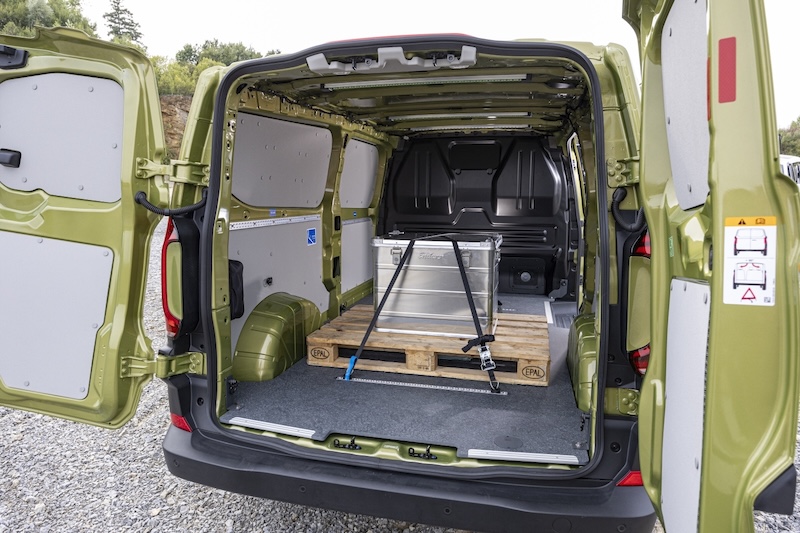
Load space – Internal space is just as important. Plumbers often install racking systems or storage units inside the van to keep parts organised. A long van with flat, upright sides and a high roof makes daily life far easier.
Fuel efficiency – Travelling between several jobs each day means that fuel costs can quickly add up. Choosing an efficient diesel van, or an electric alternative, reduces operating costs.
Ease of driving and parking – There are plenty of vans with 360-degree cameras and wide-angle mirrors, as well as parking sensors.
Top vans for plumbers
Several vans stand out as strong choices for plumbing businesses thanks to their reliability, practicality and running costs, according to Select Van Leasing.
Volkswagen Transporter – Has a reputation for excellent build quality and strong resale values. The Transporter also has an excellent ownership package, with drivers able to take advantage of a five-year warranty, plus five years of servicing and MOTs.
Ford Transit Custom – This has long been the UK’s most popular van, and it’s easy to see why. It strikes an excellent balance between size, practicality and comfort, with a spacious cargo area and strong payload capacity. The Transit Custom also benefits from an extensive dealer network and a wide range of accessories and racking systems.
Vauxhall Vivaro – Strong payload limits make it a great option for those hauling heavy loads in the back, with some models able to take more than 1.3 tonnes. A handy load-through panel under the passenger seat allows you to slide in longer items. The Vivaro is also available as a fully electric model.
Citroen Dispatch / Fiat Scudo / Peugeot Expert – If the Vivaro is the right van for you, don’t forget to take a look at the Citroen, Fiat and Peugeot trio, too. They’re all exactly the same van but with a different badge and very minor trim differences. That means they all have the same car-park friendly sub-2m height. There are no end of customisation options, from racking to sporty cosmetic upgrades.
Toyota Proace – If four versions of the same van weren’t enough, there’s a fifth option! The Toyota has precisely the same strengths as the Citroen, Fiat, Peugeot and Vauxhall siblings, but comes with a little extra kit and, crucially, impressive extra support. Toyota’s warranty can run for as long as 10 years without too many hoops to jump through.
Renault Trafic / Nissan Primastar – The Trafic and its all but identical Nissan sibling are well known for long load length and clever interior design.
Mercedes Vito – If you want to make a good first impression, the Mercedes badge on the front of the Vito will appeal to businesses that want to project a more premium image. It’s comfortable, feels prestigious and drives nicely, with smooth engines and an engaging chassis.
Choosing a van based on plumbing work
Different plumbing businesses have slightly different needs, so the right van depends on the kinds of jobs you do most often.
For domestic callouts, a short-wheelbase van such as a Ford Transit Custom or Vauxhall Vivaro often makes the most sense. These are easier to park on tight residential streets, easier to manoeuvre and still offer enough room.
If your work involves boiler installations, bathroom refits or larger planned jobs, a long-wheelbase van can be a better fit. Extra load length makes it easier to carry bulky items while still leaving room for shelving or racking.
For plumbers working on commercial sites or carrying a wider range of parts, load organisation can be just as important as outright size. In that case, a van with square-sided load space, a useful payload and plenty of racking options may be more valuable.
Should plumbers consider electric vans?
Electric vans are becoming increasingly popular among trades, particularly in cities with clean air zones or emissions restrictions.
Potential advantages include lower fuel costs compared with diesel, especially if you can charge the van overnight. Zero emissions means you’ll have access to low-emission or clean air zones, avoiding hefty city centre charges.
There are also potential tax benefits for businesses, including lower BIK rates and a 100% first year allowance for your company.
However, there are also a few challenges to consider. Electric vans generally have shorter ranges than diesel models, which matters if you’re covering a lot of miles each day.
And charging infrastructure may not always be convenient for tradespeople who work long or unpredictable hours.
For plumbers covering mostly urban routes with predictable daily mileage, electric vans such as the Kia PV5, Ford E-Transit Custom, Vauxhall Vivaro Electric, or Volkswagen e-Transporter would be excellent options.