A compact heat storage unit filled with salt-based material could allow homes to store heat from heat pumps when electricity is cheap and release it later, according to researchers behind the technology.
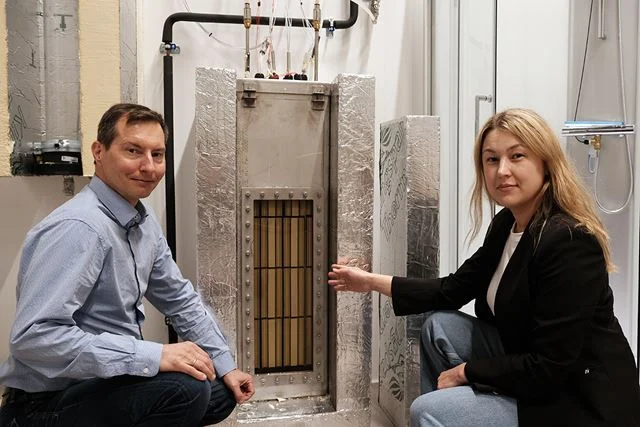
Image above: Research colleagues Martin Fossen and Galina Simonsen in front of the system that can store excess heat from heat pumps. Photo: Silje Grytli Tveten
Developed by Norway’s SINTEF research institute in collaboration with Swiss firm COWA Thermal Solutions, the system stores heat inside a sealed, insulated unit rather than in a conventional hot water tank. When surplus heat is available, a material known as a salt hydrate inside the unit melts and absorbs energy. As the material later cools and solidifies, it releases that stored heat back into the home for space heating or hot water.
“Think of it as a thermal battery,” said Galina Simonsen, a senior research scientist at SINTEF. “It stores the heat from the heat pump and makes it available when people actually need it.”
Heat pumps, which extract warmth from air, soil or water, are becoming increasingly common in private homes, but their output does not always match demand. Heat use varies depending on the time of day, household routines and weather conditions.
“The heat demand varies a lot during the day,” comments Dr Simonsen. “A heat pump that runs constantly is expensive, energy-consuming and can also put pressure on the power grid.”
By storing heat internally in a phase-changing material rather than as hot water, the researchers say the unit can hold more energy in a smaller volume and deliver it more quickly when required. This makes it easier to cope with short periods of high demand, such as morning showers or cold starts.
“The batteries charge and deliver heat quickly,” Dr Simonsen says. “It becomes easier and more comfortable to use the heat that’s already been produced.”
Salt hydrates belong to a broader group of substances known as phase change materials. Unlike ordinary salt, they contain water bound into their structure and behave differently when heated.
“When they reach a certain temperature, they melt and store heat,” add Dr Simonsen. “When they cool and return to a solid state, that heat is released.”
The researchers say the materials are non-toxic, non-flammable and relatively inexpensive, making them suitable for use in private homes. Because the heat is stored through a physical change rather than temperature alone, the unit can be significantly smaller than a traditional hot water tank.
The work forms part of an EU-funded research programme called Sure2Coat. Further testing is planned to assess how the system performs under everyday household conditions and whether it can be rolled out more widely.