Rising home improvement costs are forcing UK homeowners to delay renovation projects, including heating and energy-efficiency upgrades, while some are considering carrying out complex work themselves to save money.
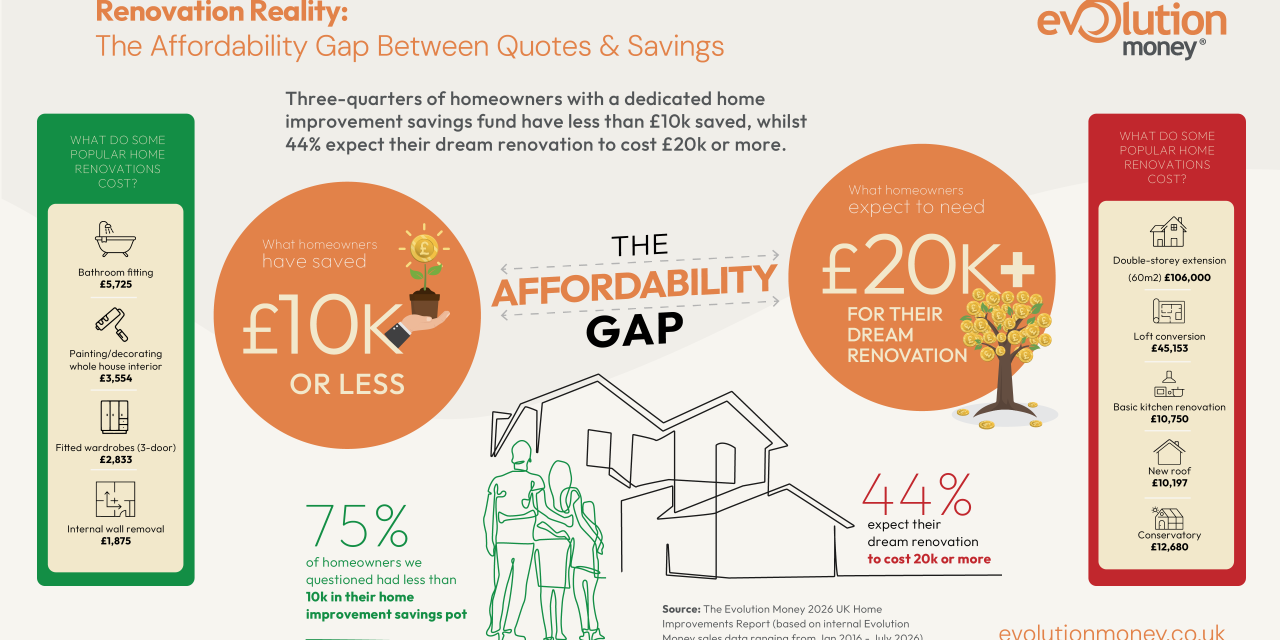
The UK Home Improvements Report 2026, based on a survey of 2,000 homeowners, found that 67% had delayed renovations because they could not afford them. Meanwhile, 75% said they would consider improvements designed to reduce energy bills, highlighting the gap between homeowners’ ambitions and what they can afford upfront.
The report, commissioned by Evolution Money, also examines how homeowners are saving for renovations, why many prefer improving their existing properties to moving house, and the growing role of borrowing in funding home improvements.
1. Homeowners lack the savings needed for major renovations
Half of the homeowners surveyed said they would use savings to pay for a major renovation if they were undertaking one immediately. However, only 34% had a dedicated home improvement fund.
The most common estimated budget for a dream renovation was £20,000 to £40,000, yet 75% of respondents had less than £10,000 saved for home improvements. Among those with a dedicated fund, 46% had less than £5,000, while 10% had more than £20,000.
Other potential sources of finance included credit cards, cited by 17%, and personal loans, cited by 15%.
The figures highlight the difference between the cost of the work homeowners want to undertake and the savings they have available to pay for it.
2. Renovation costs are delaying heating and energy-efficiency upgrades
Almost seven in 10 respondents (67%) said they had postponed home improvements because of affordability concerns, with 39% having delayed multiple projects.
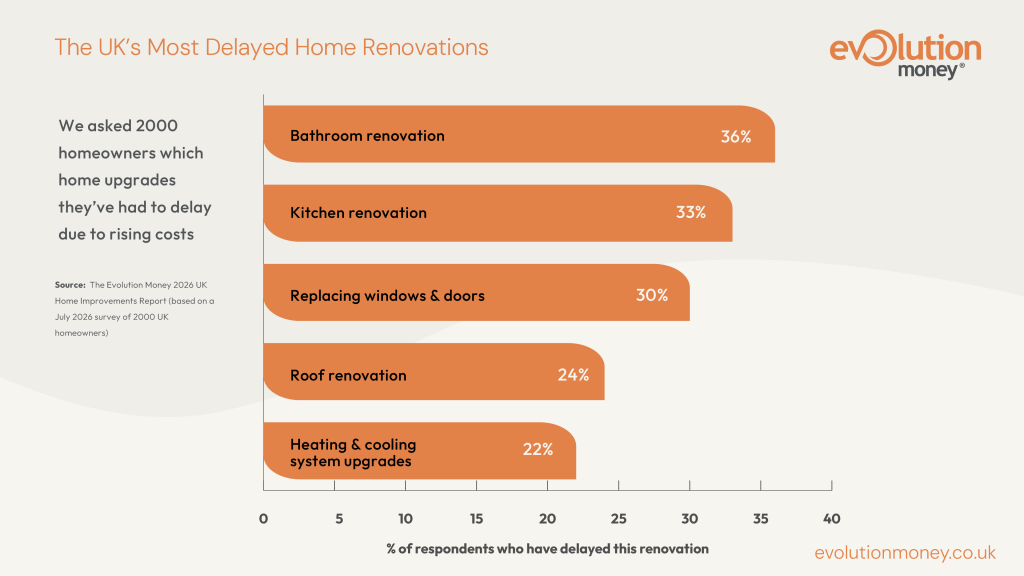
Bathrooms were the most frequently delayed renovation, cited by 36% of respondents, followed by kitchens at 33% and windows and doors at 30%.
Roof renovations had been postponed by 24%, while 22% had delayed heating and cooling upgrades.
The average reported cost of a heating and cooling upgrade was £5,050. Windows and doors averaged £8,925, while roof renovations averaged £10,197.
These figures suggest that upfront costs remain a barrier to improvements, including work that could help households reduce energy consumption and bills.
The report also found that 28% of homeowners would consider attempting a complex renovation, such as electrical work or structural alterations, themselves rather than hiring a professional to avoid the expense.
3. Most homeowners would consider energy-efficiency improvements
Despite the financial barriers, 75% of respondents said they would consider home improvements specifically intended to reduce energy bills.
However, the report’s findings suggest that the initial cost of such work can be difficult to meet from savings alone. Only 34% of respondents had a dedicated home improvement fund, and three-quarters had less than £10,000 saved for renovations.
The findings point to a potential gap between demand for energy-saving improvements and homeowners’ ability to finance them upfront. The survey does not establish how many respondents went on to install energy-efficient measures or how much they subsequently saved on their bills.
4. Homeowners prefer renovating to moving house
Despite the cost of renovations, 61% of respondents said they would be more likely to improve their current home than move over the next five years.
Among those favouring renovation, 61% said they wanted to stay because they liked their existing home and neighbourhood.
Moving costs and the stress and disruption of moving were each cited by 42% of respondents, while 41% said high house prices made moving less attractive.
The findings suggest that many homeowners want to adapt their existing properties rather than buy another home, although the expense of carrying out improvements remains a constraint.
5. Home improvement borrowing more than doubles since 2021
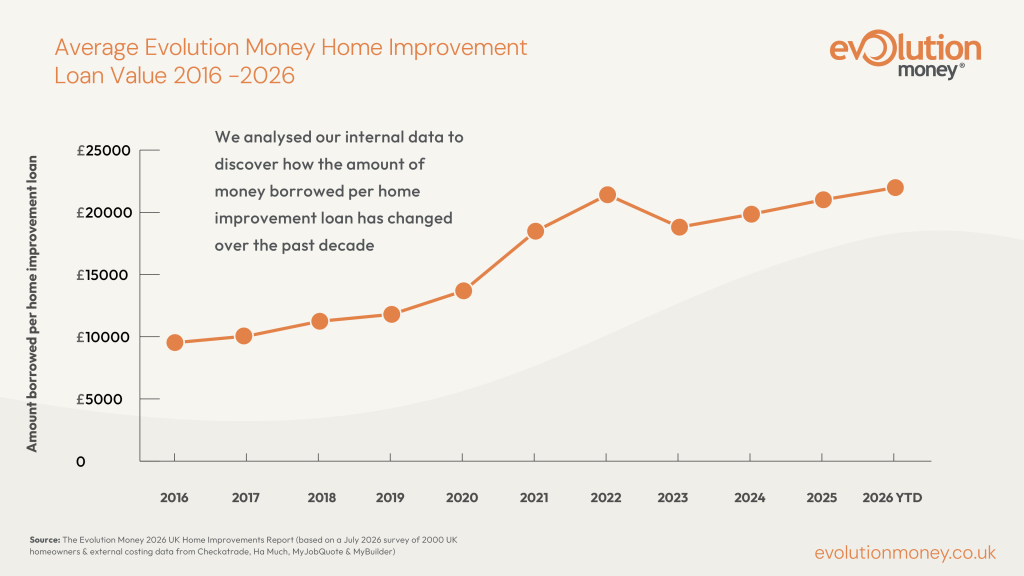
Evolution Money’s lending data indicates that borrowing is playing a growing role in financing home improvements. The company reported that the number of approved home improvement loans had more than doubled since 2021.
Applications for loans between £20,000 and £29,999 increased by 13% year-on-year in 2025, making this the fastest-growing mainstream borrowing bracket, according to the lender.
Average approved home improvement loan values rose from £9,527 in 2016 to £21,005 in 2025, an increase of 120.5%.
While the survey found that savings remained the most commonly cited way to finance a major renovation, the lending figures suggest that some homeowners are turning to borrowing to fund larger projects.
The report draws on a survey of 2,000 UK homeowners aged 18 to 99, home improvement cost data from Checkatrade, HaMuch and MyBuilder, and Evolution Money’s internal lending data.
The full report can be seen here.