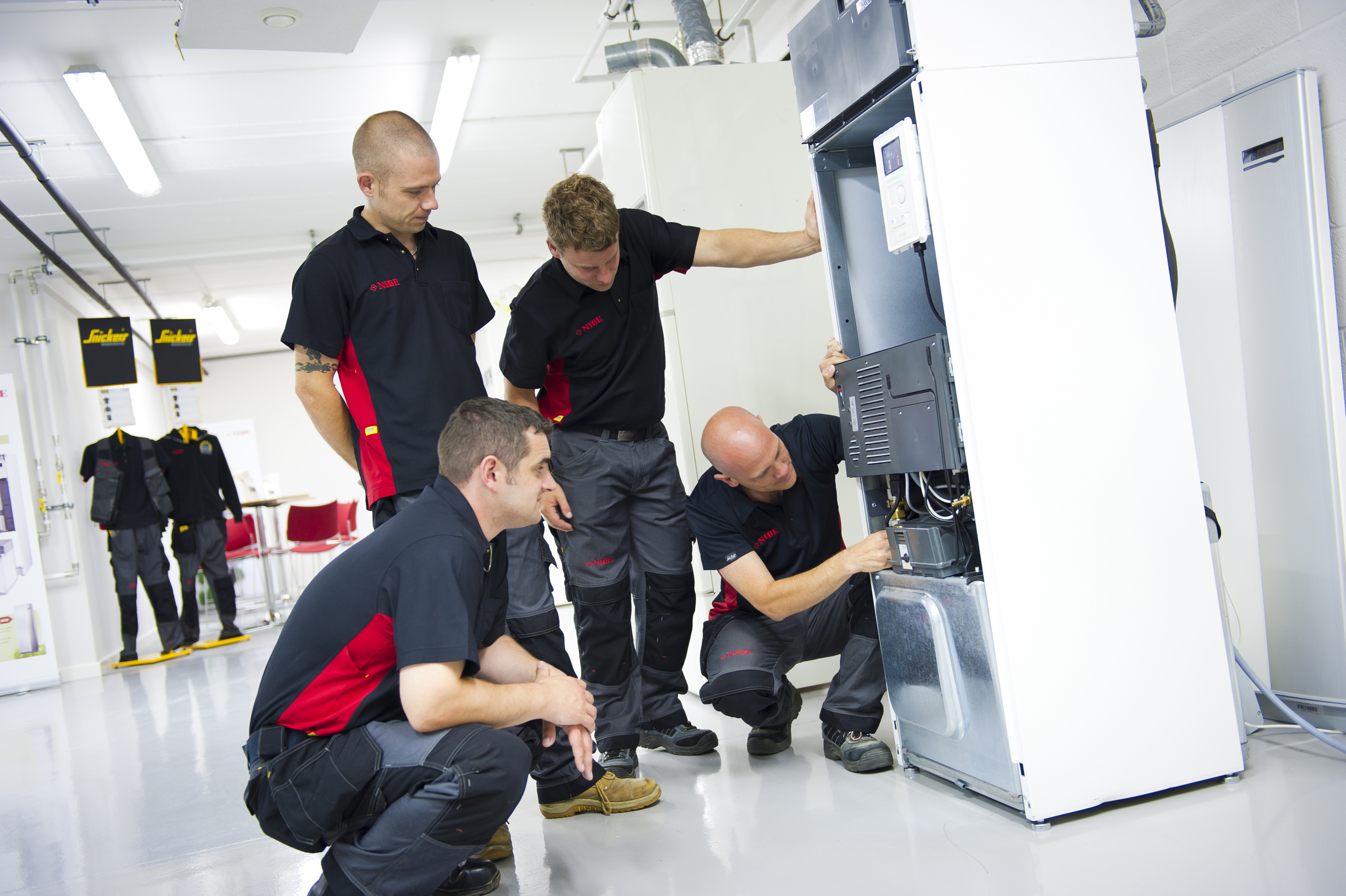
From 2025, heat pumps will be firmly positioned at the core of domestic heating and demand for skilled heat pump engineers has never been more urgent. Chris Easton, Training and Health & Safety Manager at NIBE explores upskilling options for heating engineers, explaining the role of manufacturers in delivering the skills, expertise and support required to thrive in the low carbon future.
If you are a heating engineer, it’s almost impossible to think about 2025 without considering heat pumps. We’re expecting the final details of the Future Homes Standard soon and the Labour government has pledged to build 1.5 million new homes over the next 4 years, all of which will be heated by heat pumps, either directly or through a heat network.
On the retrofit side, applications under the Boiler Upgrade Scheme reached a record monthly high in September 2024. 3,223 applications were made, 12% more than August 2024 and almost three times higher than the September 2023. DESNZ has confirmed the over-allocation of funds to ensure uninterrupted access to the grant for the rest of the financial year.
Heat pumps are the future
2024 was also the year that heat pumps were firmly placed at the centre of domestic heating decarbonisation policy. In May, the government announced the cancellation of the final hydrogen town project, pending a final decision in 2026 about the ongoing role of hydrogen in heating decarbonisation.
As I write, we’ve just heard Rachel Reeves’ first budget as Chancellor, in which she set aside funding to continue the BUS and implement the Warm Homes Plan, designed to decarbonise and improve the efficiency of existing housing stock including heat pumps and renewables.
This is all promising news for our sector, however, more needs to be done to accelerate the electrification of heat, including investment to replenish the dwindling workforce and inject new skills to ensure our sector has the capacity to deliver net zero.
Time to train
Heat pump engineers are key to the transition, particularly the existing installer base who can build on long-held skills and experience to deliver high quality, low carbon heating systems at the required pace. Crucially, installers are the consumer facing arm of the industry, trusted experts who can also help to raise awareness of heat pumps and bust the many myths commonly pushed by our media.
But where to begin? Despite a clear demand, some installers remain hesitant to take the leap into the heat pump world. There are challenges to adopting a new technology and fresh out of the training centre, most installers might not feel confident to go full steam ahead.
Ongoing support through qualification, training, certification and installation is critical and it’s here that I believe manufacturers have a key role to play. With industry expertise, personalised support and a trusted brand behind them, installers can build confidence in a low-risk environment. Manufacturers are uniquely positioned to nurture installers from the start and throughout their careers, ensuring they keep pace with technological change and best practice.
Heat pump training – the process
The journey to MCS certification can be challenging for new heat pump installers, but partnering with a trusted manufacturer offers invaluable support at every step—from training and first installations to managing paperwork and certification. Beyond MCS, manufacturers provide ongoing technical and marketing support, helping installers to build confidence and grow their businesses.
Qualifications
The first step to becoming a certified heat pump installer is earning the RQF Level 3 Award in Heat Pump Technology. We deliver the LCL Awards qualification as part of the NIBE Pro Installer scheme that covers both ground source and air source heat pump technology. For those looking to design heat pump systems, the Low Temperature Heating and Hot Water in Dwellings qualifications is required, just make sure its approved by MCS. NIBE also offer this course as part of the NIBE Pro Akademi package, if required.
There is £500 funding towards the cost of training, subject to eligibility and availability, through the government Heat Training Grant scheme. Also, with NIBE Pro Akademi any cost paid is refundable against first NIBE product purchases.
MCS certification
Once qualified, installers can apply for MCS Certification, which enables them to access government funding for installations. To become certified, the first install must be assessed by a certification body. Partnering with a manufacturer can make this process easier —they’ll assist with the first installation and provide guidance to ensure you meet certification standards.
If you’re already qualified and/or MCS Certified – you can still benefit from the expertise, installation support and brand reputation of partnering with a trusted manufacturer.
Product training
Product training is delivered direct by some manufacturers. With NIBE, this is free of charge.
During product training, installers learn about the very latest developments in heat pump technology and controls to ensure they specify and deliver the most effective low carbon solutions for their customers. By completing product training with NIBE, installers are aligning themselves with a global brand and everything that comes with it – technical back up, marketing materials, supporting documents and longer warranties.
Manufacturers invest heavily in consumer marketing, brand recognition, and lead generation, providing installers with increased visibility and customer demand without bearing the full burden alone. By joining forces, installers can “piggyback” on the manufacturer’s strong reputation, gaining credibility, trust and a competitive edge as the heat pump market grows.
Personalised pathway
Manufacturers can act as the missing link in the training chain, delivering industry qualifications, product training, market-leading products and ongoing technical support that is vital to installers looking to take the leap from heating to heat pumps. This flexibility is designed to accommodate each installer’s individual qualifications and career journey, providing a personalised path to help them advance in the heat pump industry.
As a leading heat pump manufacturer, we want our heat pumps to exceed expectations every time and do whatever is necessary to help our NIBE Pro installers achieve this, from ongoing technical training to guidance, troubleshooting and problem solving. This holistic approach to upskilling provides unrivalled support for installers, improves outcomes for homeowners and, ultimately, builds trust in the heat pump sector.