Fan convectors can provide an efficient and easy-to-install solution for a range of applications, including churches, libraries, hotels and other public buildings. Jim Bennett, Sales & Marketing Director at Smith’s Environmental Products, highlights some recent projects.
Fan convectors, once discovered, are a heating installer’s secret weapon, particularly those who work on projects in both the domestic and light commercial markets. The hydronic nature of fan convectors means that installers will find them easy and straightforward to install. They are compatible with gas and oil-fired boilers, with the added advantage that fan convectors work extremely effectively with biomass and air source heat pumps too.
Fan convectors function by means of a heat exchanger and a small electric fan. The heat exchanger is connected to a standard two-pipe central heating system which passes hot water through the heat exchanger, transferring its heat to the aluminium fins. The fan draws in cooler air which is heated as it moves over the heat exchanger and is then expelled gently back into the room by the same fan.
Unlike a conventional panel radiator, the fan convector provides more even temperature spread and much faster warmth. The small fan means that the heat produced is distributed using forced, rather than natural, convection and consequently this makes it far more responsive to thermostatic controls and means that fan convectors lend themselves to a significant number of different commercial applications.
Church goer
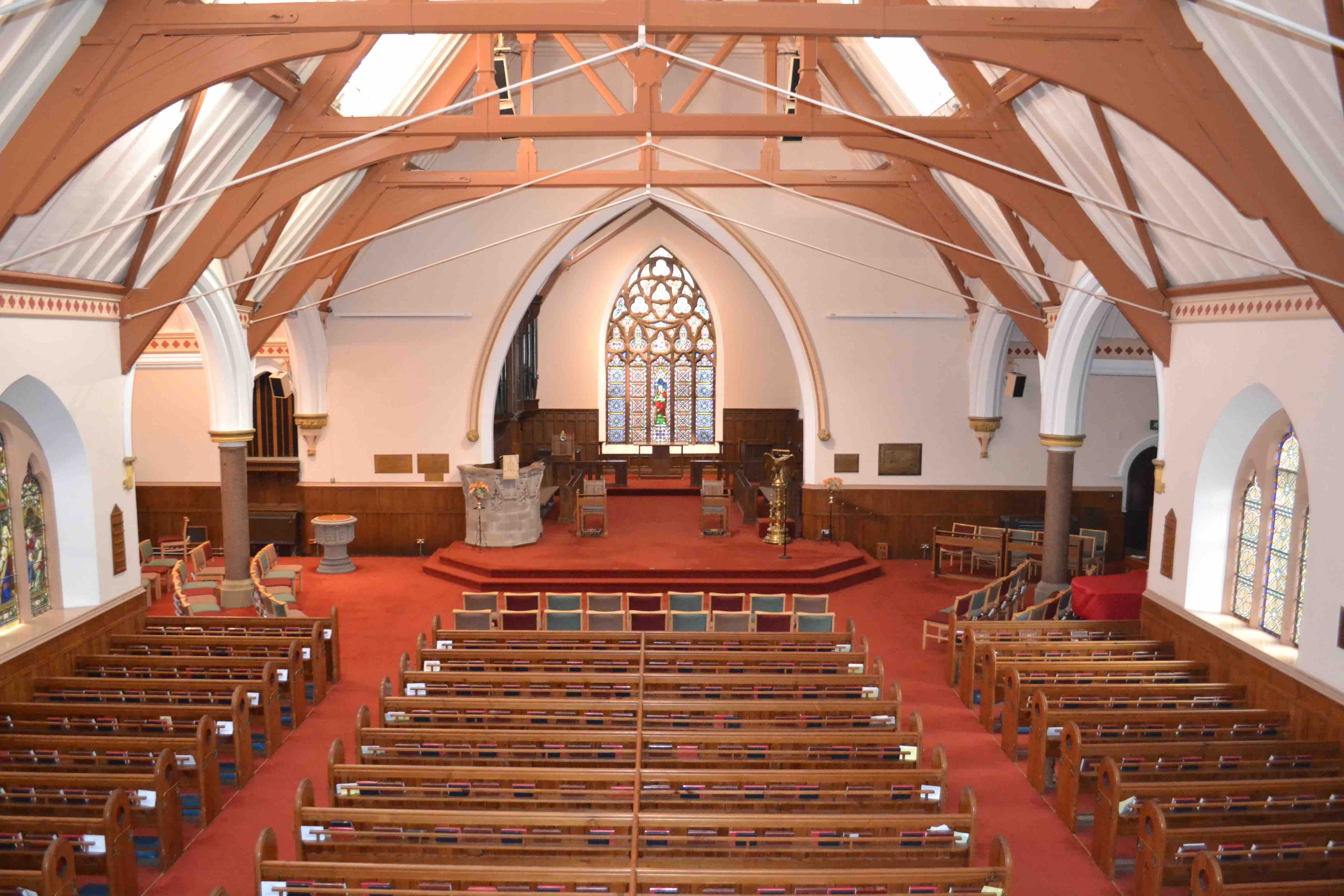
We have some great examples of projects where fan convectors were specifically chosen because of the advantages that they provide. St James’s Church in Southport is one such project. The Grade II listed building was in need of a brand new heating system. The new system needed be able to generate heat quickly and efficiently, and be easily integrated into various locations whilst matching the interior of the building. Under the recommendation of the contractor, Wakefield & Wilson, a decision was made to partner our Caspian Universal fan convectors with a new indoor boiler room.
By creating a new boiler room inside the main building and installing 12 Caspians in different parts of the church, the contractor was able to completely reinvent the church’s heating system so that no matter what time of year it is, it is always warm and cosy inside. The parish team were particularly pleased that this will see a reduction in heating bills.
Fan convectors provide almost instantaneous heat which also means that there is no longer any need for anyone to come into the church early to bring the building up to temperature before a service or event. In our own factory tests, we have proven that a space can be heated from a standing starting temperature of 12°C to a comfortable 25°C within 15 minutes. The inherent design of the fan convector means that they use a mere 5% of the water content of an equivalent output radiator, which means they are also significantly more efficient.
Library member
We have a project this summer where Caspian High Level fan convectors are to be installed high on the walls of a secondary school library. By default, libraries traditionally have scarce wall space, with all available space used for displaying and storing books, and because fan convectors can be sited almost in any location, the Caspian High Level units will be sited high on the library walls, to maximise all the available space possible.
This brings a number of advantages to the library and its users. By re-siting heat emitters out of the reach of students, it protects the units from accidental damage. Notwithstanding their low surface temperature, this high positioning also protects the children from the hazards low sited heat emitters can pose. It’s also worth noting that the contractor specified these fan convectors because they deliver quiet, unobtrusive heating within a library.
Similarly, another project this summer at is at a care home where fan convectors have been selected precisely because they can be sited high on walls, out of the reach of residents. In care homes, the lower wall area is often required for hand rails and to allow the easy movement of wheel chairs and beds, as well as facilitating the comfortable and safe passage of residents walking who may also be using a variety of aids to support their balance and mobility.
Hotel booking
Fan convectors can be concealed within the fabric of a building to accommodate the needs, function or historical significance of a listed building. Grim’s Dyke Hotel in Old Redding, Harrow Weald, London is the beautiful former home of Sir William Gilbert, one half of the famous musical partnership of Gilbert and Sullivan. The owners were keen to invest in a new efficient heating system, yet with a building of this age, they were also keen to maintain its aesthetics. Previously, natural convectors had been concealed in the joinery so when the contractors Keypark Ltd introduced Smith’s Caspian Universal Concealed to the hotel, it was the best-fit solution, ticking all the requirements the hotel had for its central heating.
A number of Caspian Concealed units were successfully installed in a number of rooms and the concealment of the fan convectors has been done beautifully, without any compromise to the internal fabric of the building or to the fan convection heating. Such fan convectors are usually very easy to control and with this project, radio frequency controllers were introduced to manage the Caspians.
The hotel’s General Manager John Parker explains: “The new boilers and fan convector heating have meant that we no longer have to supplement the heating with additional electrical appliances, which has already made a positive impact on our heating costs. The combination of more efficient, new boilers and using thermostats to control the fan convectors means that we do not have to continually adjust the heating because the temperature around the hotel is always consistent.
“One of the challenges with this listed building is that the windows are very large and can’t be double-glazed. The previous style of heating simply didn’t cope in really cold weather and now, with any of our regular events, the main door is continually open and the fan convectors respond to this temperature change and cope with the sudden demand.”