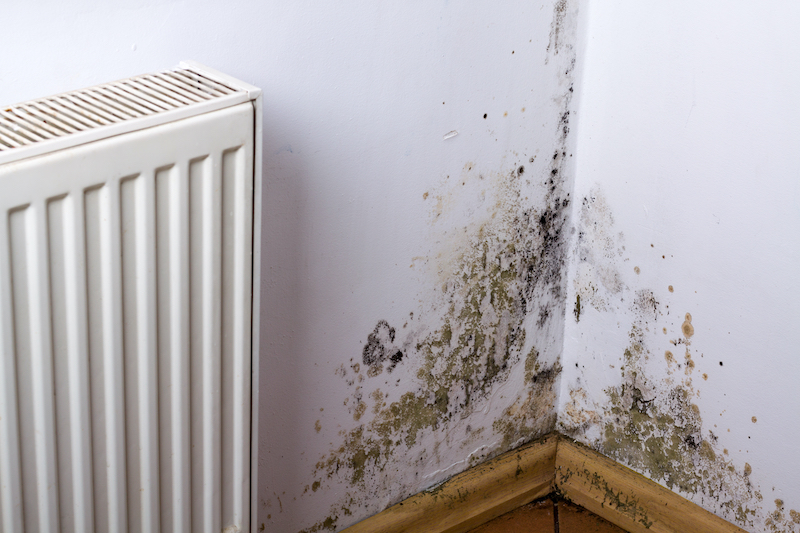
A new report from Uswitch has found that more than 60% of English households have encountered mould, an increase from 58% last year. The findings in the ‘Mouldy Nation’ report are based on complaints submitted to local authorities and housing associations, shedding light on the widespread nature of the problem and its connection to financial difficulties in maintaining adequate heating.
The report highlights that mould affects various types of housing, with 43% of homeowners, 28% of renters in private properties, 16% of local authority tenants, and 12% of housing association residents reporting issues. Most individuals who experienced mould also noted that affording proper heating was a challenge.
The Housing Ombudsman reported a higher volume of complaints related to damp and mould from housing association tenants compared to those in local authority housing. The English Housing Survey indicates a 33% decrease in damp and mould issues within local authority housing over the past decade, contrasted with a 19% increase in housing associations since 2012. Overall, the proportion of English properties affected by damp and mould has decreased by 17%.
Significantly, eight of the top ten local authorities for mould complaints are located in London, with Haringey receiving the highest rate at approximately 31 complaints per 10,000 housing units. Conversely, West Northamptonshire experienced a staggering 367% increase in complaints, rising from three in 2022/23 to 14 in 2023/24.
While the report notes some areas, such as Wakefield, Buckinghamshire, and Salford, have a large number of social housing units, no mould-related complaints were reported to the Housing Ombudsman from these regions.
Responsibility for mould issues often leads to disputes between tenants and landlords. The report reveals that 69% of respondents believe landlords should be held accountable, while a third reported being blamed for mould in their own homes.
Shelter.org outlines that landlords are required to address specific causes of mould, including structural defects and inadequate ventilation, while tenants are encouraged to take preventive measures such as proper ventilation and moisture management.
Ben Gallizzi, senior content editor – energy and electric vehicles for Uswitch, comments:
“Having a warm home is one of the best ways to prevent mould from growing. However, as the cost of living crisis has taken hold, 68% of people have admitted that they’ve put their heating on less due to cost in the past two years. Over 56% of these people believe that this is a direct cause of mould becoming more of a problem in their homes.
“But for the 367,119 homes without central heating in the UK, adequately heating the home consistently enough to help prevent mould can be even trickier. Our energy statistics page delves deeper into the number of households without heating.
“If you’re struggling with your energy bills, there is help available. Energy suppliers are required to have plans in place to help customers who need it. There are also various government-run support schemes, such as the Warm Home Discount, Winter Fuel Payment and Cold Weather Payment.
“You can also compare energy deals to see if there might be a suitable fixed tariff on offer that you could switch to.”