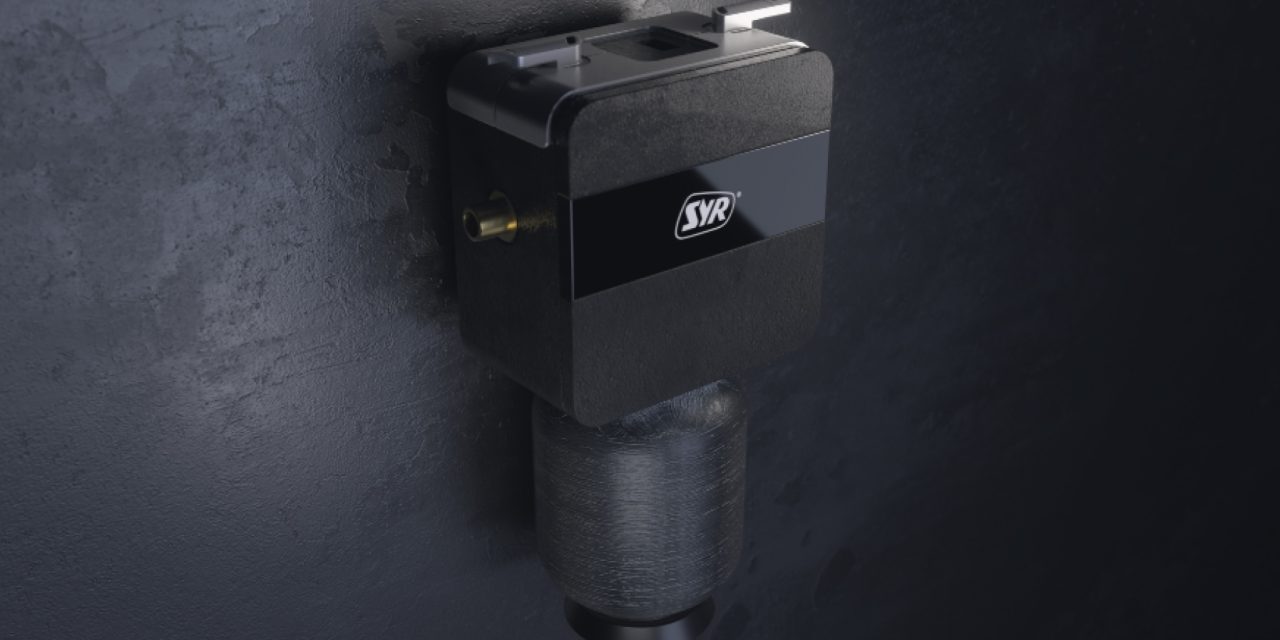
German valve manufacturer SYR has produced an advanced combination valve for the automatic filling of heating systems. Eric Winter explains the benefits of the innovative solution that features a demineralisation cartridge and automatic system monitoring.
As the UK heating market increasingly adopts low-carbon technologies, particularly with the rising installation of heat pumps, system designers and installers are seeking innovative solutions to maintain optimal cleanliness and water quality. Ensuring the longevity and efficiency of these heating systems requires new approaches, especially those that are environmentally conscious and chemical-free.
Up to standard
A notable topic gaining momentum in the industry, especially with renewable systems, is the VDI2035 standard. This has long been the recognised standard in Germany for chemical-free filling alternatives, designed to prevent damage in heating installations caused by poor water quality, corrosion, and scale formation.
The key principle behind the VDI2035 approach is proactive water treatment. Instead of attempting to remedy poor water quality with chemicals after it has entered the system, installers treat the water beforehand. This process removes scale and stabilises pH levels, resulting in better control over water quality and significant environmental benefits.
To ensure proper functioning and a long service life for modern heating installations, the quality of the filling water is crucial—hence the creation of the VDI2035 standard.
Water hardness
Water hardness is primarily determined by the concentration of calcium and magnesium salts. These minerals, known as hardeners, define the ‘total hardness’ of water, measured in the VDI2035 standard in °dH (degrees of German hardness) or mol/m3. One German degree of water hardness (1°dH) equates to 10 mg of calcium oxide or 7.19mg of magnesium oxide per litre of water. Additionally, one millimole of calcium and magnesium ions corresponds to 100mg of calcium carbonate (CaCO3).
The pH value measures the acidity or basicity of water. For heating water, maintaining an alkaline pH between 8.2 and 10.0 is essential, as acidic water accelerates corrosion processes. The pH affects the protective surface layers on metals within the heating system, which serve as a natural barrier against corrosion. Aluminium components, such as heat exchangers and radiators, require a pH between 9.0 and 10.0 to avoid damage.
Filling procedures
When filling a heating system with demineralised water, installers must consider several practical aspects. In UK domestic properties, the system is often filled via a filling loop or a similar arrangement integrated into the heating appliance. Complying with water regulations is essential, requiring backflow protection to class 3 for domestic and class 4 for commercial settings. Isolators must be provided on both the potable and heating water sides of the filling loop, and the loop must be disconnected after use.
Permanent connection to the mains is only permitted if a CA device (domestic) or BA device (commercial, RPZ) is used. The demineralisation system must be installed downstream of the filling loop. This can lead to a complex and time-consuming installation. However, SYR has simplified this process with the Filling Station 3228 All-in-One Connect.
Automatic monitoring
The All-in-One Connect ensures smooth and effective operation of the heating installation by providing automatic monitoring of filling and water conditioning, conductivity determination, special leakage protection, and an integrated RPZ valve for backflow protection up to fluid category 4.
Thanks to electronic monitoring and an integrated pressure reducing valve, the filling process is stopped once the desired system pressure has been reached. The filling frequencies are recorded, displayed in statistics and can be called up at any time. The initial system filling may also include the display of the total filling volume. The built-in leakage detection system will monitor the frequency of top ups to the system, and the amount of water used and if this falls outside pre-set parameters alerts are triggered.
The 3228 All-in-One Connect is Wi-Fi-enabled and comes with a LAN connection. The SYR app can be used to create, monitor, check and control a project. For example, the smart valve informs installers/operators via push notification that the connected cartridge will soon be exhausted.
Maintaining efficiency
As renewable heating systems, such as heat pumps, become increasingly popular, installers are motivated to seek improved methods for ensuring system longevity and sustained high efficiency. The chemical-free solution achieves this by offering lower long-term maintenance costs, eliminating the need for chemical storage and disposal, and providing a more environmentally friendly system overall.