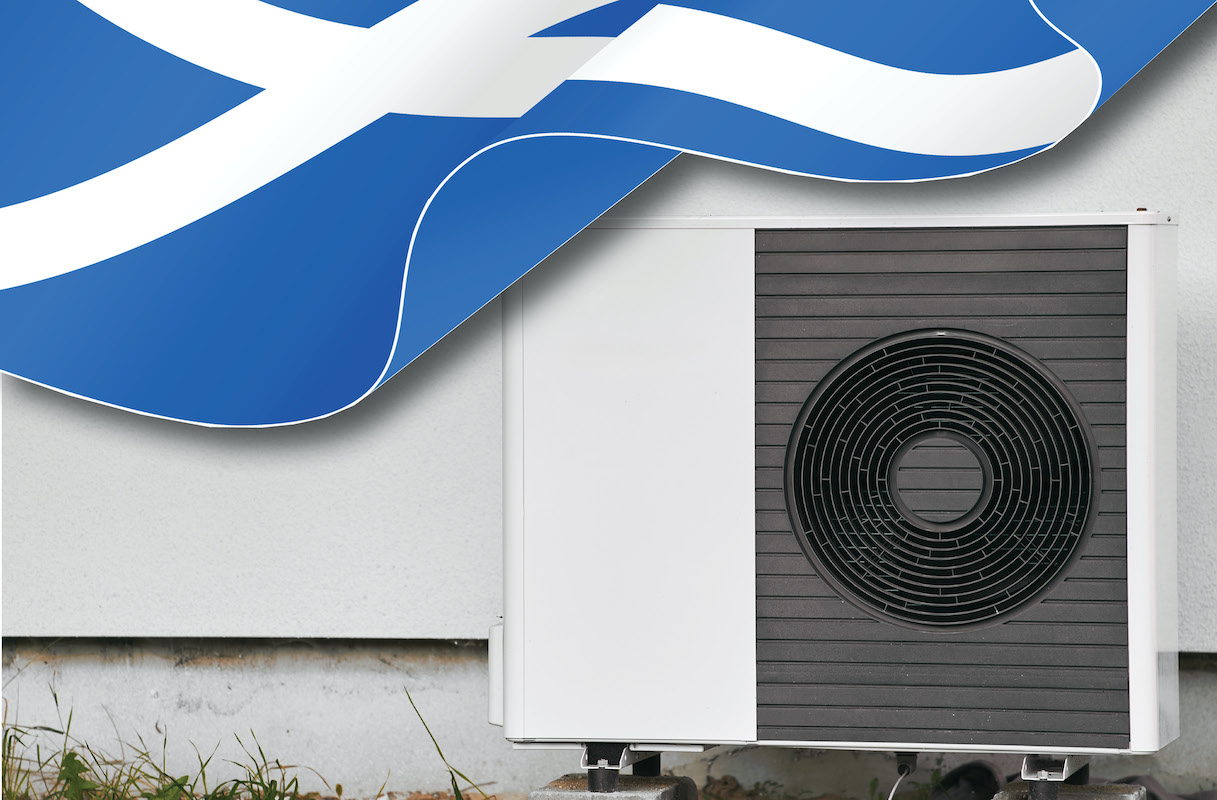
The Plumbing and Heating Federation has warned that funding delays and high electricity costs are stalling Scotland’s decarbonisation progress.
Fewer than 9,000 heat pumps have been installed in Scotland since 2019, significantly lagging behind government targets for decarbonisation. The Federation has highlighted these figures, drawn from the Home Energy Scotland (HES) Grant and Loan Scheme and the Private Rented Sector Landlord Loan Scheme, as evidence of a stalled transition to clean heating solutions.
“While it is encouraging to see growing numbers of homeowners and landlords making the switch to clean heating solutions,” says Fiona Hodgson, chief executive of the Plumbing and Heating Federation, “the Scottish government’s ambition of over one million homes converted to low or zero-emission heat by 2030 is simply not achievable under current conditions. The data highlights the urgent need for clearer policy direction, greater financial certainty and stronger industry support.”
However, the Federation has warned that ambitious targets alone are not enough. It describes the Climate Change Committee’s (CCC) latest 2040 target for 50% heat pump adoption as “completely detached from reality” due to the severe shortage of trained professionals.
“Heat pump adoption cannot be driven by wishful thinking,” adds Hodgson. “The CCC and successive Westminster and devolved governments keep setting ambitious targets while ignoring the fundamental issue: there simply are not enough trained professionals to install them. All governments need to stop offloading responsibility onto businesses and take action to ensure we have the people to deliver this transition.”
The Federation has also raised serious concerns over the Home Energy Scotland scheme’s payment structure, which places a heavy financial burden on installers. Many must absorb substantial upfront costs, leading to cash-flow pressures and administrative challenges that threaten business sustainability.
“Installers are at the heart of Scotland’s green heating transition, but they need a stable, transparent funding framework to remain viable. Addressing cash-flow pressures and streamlining payments is critical to scaling up heat pump adoption at the pace required,” adds Fiona Hodgson.
“A CBI report highlights the significant economic benefits of investing in the net zero economy. In Scotland alone, the sector contributes £9.1 billion, 4.9% of the country’s total GV, and supports nearly one in 25 Scottish workers. However, the financial strain of this transition cannot fall solely on already stretched businesses, especially as they face mounting pressures, including the upcoming National Insurance hike.”
Beyond funding and administrative hurdles, the Federation is calling for urgent action on the wider policy challenge of energy pricing. The significant disparity, known as the ‘spark gap’, between electricity and gas costs remains a major barrier to heat pump adoption.
“We are in a perverse situation where government policy tells people to transition to electric heating, yet energy pricing actively discourages them from doing so,” says Hodgson. “The public will not be persuaded to switch to a more expensive heating system in the middle of a cost-of-living crisis. Without serious reform to energy pricing, the transition to low-carbon heating will remain a pipe dream.”
Fiona Hodgson concludes: “Even with various funding schemes, the fundamental cost imbalance between electricity and fossil-fuel heating remains a deterrent for households. Closing the spark gap will require close coordination between Westminster and the devolved administrations.
“Only by working together can we provide the financial incentives and market certainty needed to boost consumer confidence and achieve Scotland’s net-zero targets.”