
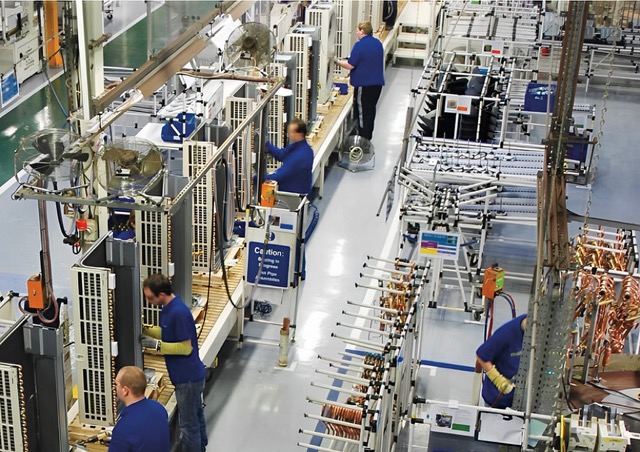
A new report by Gemserv and Minviro highlights the importance of maximising the sustainability of heat pumps throughout their entire lifecycle by addressing emissions in manufacturing and material sourcing.
As the installation of heat pumps accelerates across the UK, with nearly 5,000 units being added monthly, the study raises questions about the environmental impact of these low-carbon heating systems beyond their operational phase.
Heat pumps are widely recognised as a more environmentally friendly alternative to traditional gas boilers, which can produce 55% more emissions during use compared to a 10kW heat pump. However, the new white paper suggests that the production process of heat pumps is a significant contributor to their overall carbon footprint.
Currently, manufacturing a 10kW heat pump generates approximately 640kg of CO2 equivalent in embodied carbon emissions, primarily due to the materials used, such as steel and refrigerants. The report emphasises that focusing on sustainable manufacturing practices could reduce these emissions by nearly half. For example:
• Using sustainable sourced steel powered by renewable energy could reduce carbon emissions by up to 70%
• Insulation emissions could be cut by 50% by using recycled materials
• Further reductions can be achieved by transitioning manufacturing operations to renewable energy
The further considerations recommended by Gemserv and Minviro would not only strengthen the environmental benefits of heat pumps but also help manufacturers and installers comply with upcoming regulations. For example, the Ecodesign for Sustainable Products Regulation (ESPR) and the Corporate Sustainability Reporting Directive (CSRD) both push for a circular, lower-impact economy, with Life Cycle Assessments (LCA) invaluable in revealing hotspots necessary to achieve compliance. The paper also depicts how LCA insights can enable better-informed corporate sustainability decision-making and improve the bottom line for manufacturers.
The white paper spotlights four key areas for improving the sustainability of heat pumps:
• The significant role of steel production in driving heat pump emissions
• The hidden environmental costs of tube insulation in heat pump manufacturing
• The impact of on-site electricity consumption during manufacturing
• The need to carefully assess the environmental impact of refrigerants
Commenting on the findings, Waco Yokoyama, sustainability and circular economy consultant at Gemserv says: “The life cycle impact of the products we are using to achieve net zero emissions is just as important as the emissions produced by these products in operation. The choices manufacturers and installers make now are critical to ensure an energy transition that extensively reduces carbon emissions and addresses broader impacts on the environment.”
Jordan Lindsay, research and development manager at Minviro, adds: “There is no doubt that low carbon technologies like heat pumps are the right solution to replace fossil fuels. We are proud to have utilised our life cycle assessment (LCA) capabilities in this study to demonstrate how to maximise the sustainability benefits of heat pumps through reducing their embodied carbon in materials and refrigerant choice.
The whitepaper has been produced in collaboration between Gemserv and Minviro and is available here.
