With more plumbers turning to push-fit to save time on the job, Wavin’s Hep2O keyless fitting – launched just a year ago – has fast become a favourite for many installers. But with the traditional keyed version still proving popular, one question remains: how do you choose between the two on different jobs?
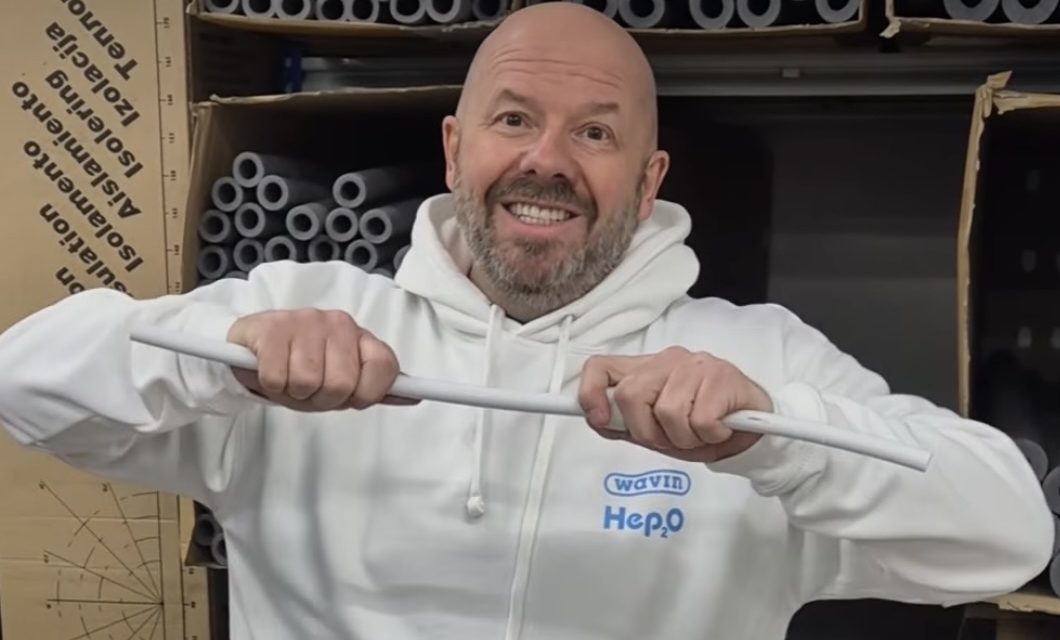
To get some honest, on-the-tools insight, Wavin caught up with professional plumber and influencer Steve Gray (@stevegraygasservices), a highly trained gas and heating engineer who shares practical tips and experiences with his 3,500+ Instagram followers. Here’s what he had to say.
What challenges do you typically face on the job?
“I work across all sorts of buildings – from houses to schools and public spaces. One of the biggest challenges I face is not being able to solder in certain environments. In public buildings, for example, speed is everything when isolating water and soldering simply isn’t an option. Push-fit is a lifesaver here – since the system requires no soldering to make a joint, these fittings allow me to work quickly and safely.”
When you’re choosing which type of fitting to use, what factors do you weigh up?
“The main things I look at are the type of building I’m working in and the system itself – whether it’s a brand-new install or a retrofit repair. Another big factor is how long the water can realistically be switched off. In some public buildings, I might only get a few minutes, so the fitting I choose must work around that.”
What’s your impression of Wavin’s Hep2O range?
“Hep2O has always stood out to me as an outstanding product – with its ease of installation and adaptability. That’s why I’ve used it for so long. With the development of the new keyless fitting, it shows Wavin are continuing to expand on an already top-quality range of products.”
Keyed vs. keyless – what’s the difference?
“Having used the keyed version of Hep2O for many years, I’d say the most noticeable difference is the size. The keyless version is more compact, which is ideal for tight spaces. It also comes pre-locked, so you just insert the pipe into the fitting, and the joint is done – a real time saver compared to manually locking dozens of fittings.”
When would you opt for the new keyless version?
“In domestic jobs, where there’s little risk of tampering, the keyless system is perfect. The time-saving aspect really comes into play – especially when you’re under pressure to get the job done quickly!”
And when do you prefer the keyed version?
“I’d opt for the keyed version of the Hep2O fitting on jobs in public spaces, where fittings could be with tampered with by members of the public – for example, schools or public toilets. Having the extra security means there’s no chance of interference or accidents.”
What advice would you give to other installer looking to use Hep2O fittings?
“I’m a big advocate for Hep2O and would happily recommend it to any installer. It’s a versatile, all-round product that’s always worth keeping in the van, as it works across all water systems. For first fix it’s ideal, offering flexibility and adjustment when returning for second fix, and in emergencies it’s invaluable – you can even use it on a live supply if you’re struggling to isolate a defective valve or stopcock.”
With both keyed and keyless versions of Hep2O available on the market, Steve’s advice is clear: the right fitting depends on the job at hand.
Want to keep up with Steve? Follow his Instagram account @stevegraygasservices to keep up to date with his latest content.
Wavin’s new fifth-generation keyless fitting offers speed and a slimmer design for tight installs and is now widely available in stockists across the UK. To find your local stockist please visit: