Five years on from university graduation the financial picture for UK graduates is less secure than many would expect. Mark Krull, director at Logic4training, explores why choosing the trades over university is a smart, future-proof career choice, offering immediate opportunities and sustainable career prospects in a growing market.
Traditionally, university has been seen as the ‘expected route’ for young people – a pathway underpinned by the perception that a degree guarantees career security. Today, with a growing debate around student debt, AI-driven changes to the job market and the real-world value of a degree, a sensible question arises for anyone considering higher education: is the cost, time and delayed earnings still worth it?
Earning potential
The Government’s Longitudinal Education Outcomes (LEO) data shows that five years after completing a degree, 88.6% of graduates are in sustained employment, earning a median salary of £31,400. However, once inflation is taken into account, that income is worth £500 less than in previous years. Postgraduates earn more on paper, averaging £38,000, yet their real earnings are down by around £700.
Meanwhile, the cost of getting a degree has never been higher. The average debt carried by students entering the workplace in England in 2024 was around £53,000. For many young people, this debt is the price of entry into a graduate job market where pay progression is slow and competition for roles is fierce.
Reports suggest a high percentage of graduates are in some form of work, with recent data showing between 59% and 61% in full-time employment for those finishing in the 2022/23 academic year. However, while university leads to high employability, graduate incomes are struggling to keep pace with the cost of living, leaving the return on time, debt and investment weaker than it once was.
Enter the trades!
So, could the trade offer a compelling alternative to university? With carbon reduction targets edging ever closer, the building services engineering industry is showing strong growth and offers real opportunities for those entering the field. Net Zero 2050 is one of the biggest challenges of our time and the nation needs skilled people to deliver practical solutions. The role of the heating engineer has evolved from a traditional focus on boilers and radiators to a multi-skilled profession that includes renewable systems, energy efficiency and smart technologies. For anyone considering a career, this sector offers both security and the chance to play a part in shaping a more sustainable future.
Forecasts suggest that over one million additional tradespeople will be required by 2033. The skills gap is no longer a forecast – it’s a queue of work stretching years ahead. With housing delivery, retrofit and net-zero commitments all reliant on competent hands, the next decade will favour people who can install, commission and maintain real systems in real homes and businesses.
Crucially, tradespeople can earn while they learn. Whether through apprenticeships or structured new-entrants programmes, pay starts from day one. For many, that means reaching the mid-to-high £30,000s faster than their graduate peers, with experienced engineers commonly progressing to £40,000+ in specialist sectors such as renewable heating, retrofitting and low-carbon technologies.
Work with purpose
Plumbers, heating engineers and electricians keep homes warm, safe and efficient, and the tasks are hands-on, varied and people-centred, delivering essential services everybody needs. Having a direct impact like this, leads to high job satisfaction, something many nine-to-fives can’t match. For the right candidate – someone who enjoys practical, physical work and problem solving – the trades offer a rewarding alternative to university.
This is also work that can’t be automated. The skilled trades offer a pathway into the technologies that will define the next decades, creating a secure career choice with a steady pipeline of work. AI and smart diagnostics will support engineers, not replace them. The industry needs competent professionals who can interpret data on site, communicate with customers and sign work off to the right standard.
Nurture the next generation
Despite clear opportunities, the plumbing and heating sector is still blighted by outdated class and gender stereotypes. It is often seen as a secondary route for those who don’t make the grade, which could not be further from the truth. We can all help to reverse this underserved reputation by offering opportunities for young people to experience what the trade has to offer.
Apprenticeships offer employers the opportunity to develop skills from the bottom up, keeping ideas fresh and ensuring the future success of the business. Managed Learning Programmes (MLPs) offer a quicker alternative for new entrants – whether they are fresh from college or changing career. Combining a structured programme of guided learning with on-the-job work experience, the MLP curriculum is rigorous, standardised and designed to meet the requirements of ACS and the Gas Safe Register.
Training in action
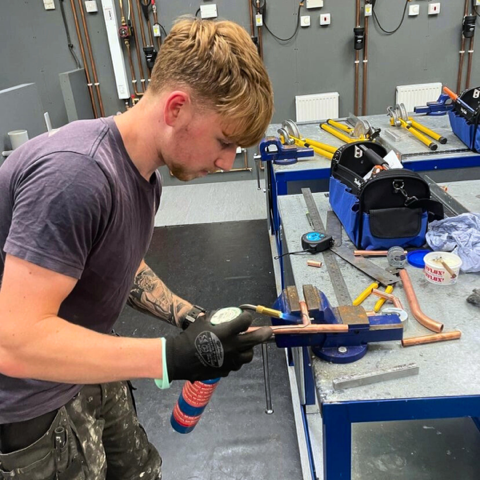
Josh Scott, winner of the Logic4training’s ‘Lifetime of Training’ competition, chose an MLP to start his career in the trades. Skipping the expected path, he chose gas engineering for its long-term prospects and immunity to automation. He earned a wage from day one, built confidence through practical training and is already applying his skills on real jobs. The momentum has helped him step onto the property ladder too – buying and flipping his first project house while still progressing with his qualifications.
Josh’s story is typical of a motivated new entrant who wants meaningful work, faster earnings and a clear ladder to climb. By starting out with a solid core trade, and adding expertise gradually, Josh is fast becoming a multi-skilled engineer – exactly what the market needs.
The winning path
In 2025, there isn’t a single ‘winner’ in the uni vs trades debate. For professions that demand academic qualifications, university largely remains the obvious route. But for those eager to earn early, sidestep debt and gain the skills driving the rollout of net-zero homes and workplaces, the trades make a compelling case.
Both routes demand commitment; both can lead to rewarding careers. The real win lies in making an informed choice – one that matches personal goals with the opportunities ahead.