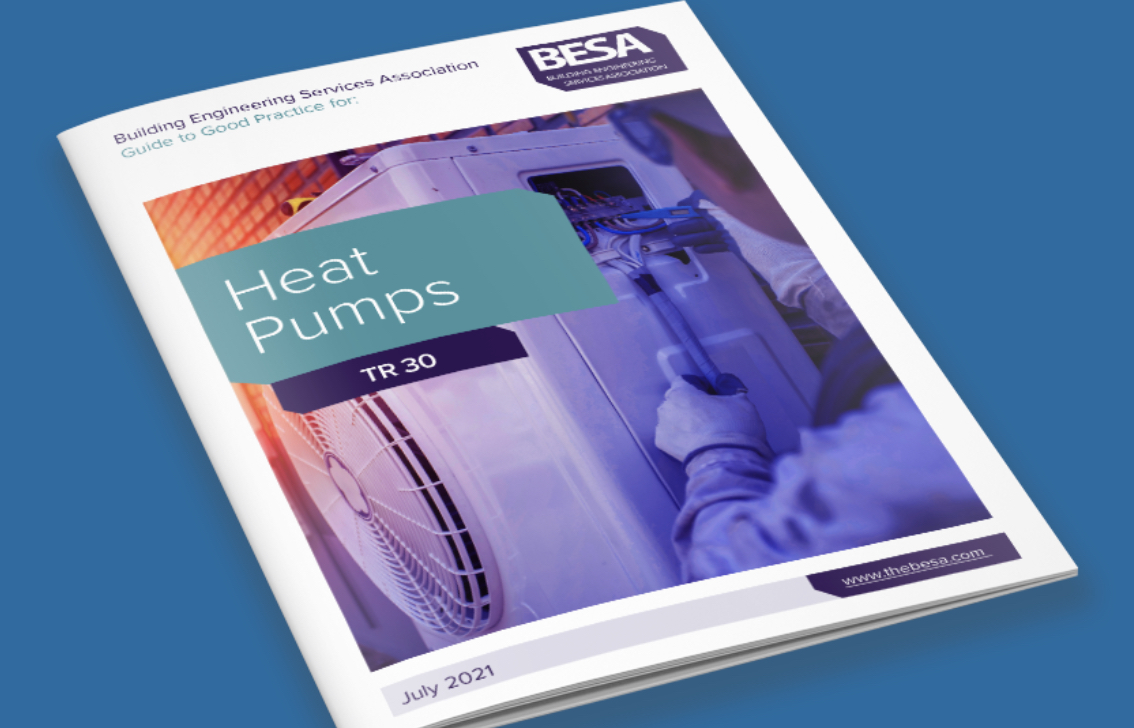
An updated technical guide on heat pump technology is now available from the Building Engineering Services Association (BESA). The Guide to Good Practice for Heat Pump Installation (TR/30) is claimed to be the most comprehensive summary of the technology produced so far and clearly explains about the different types of heat pump available and clarifies which version to choose for each application.
Available to buy from the BESA website (£70 to BESA members and £140 to non-members) the guide provides an overview of different applications and also explains how to avoid the design problems that have impaired the performance of some systems to help improve consumer satisfaction and cut more carbon emissions.
The updated guidance contains the latest references to building standards and codes of practice as well as data provided by CIBSE and BSRIA in their most recent guides. Carbon emission factors have been updated along with explanations of new and emerging technologies that use different refrigerant types and blends and so present new hazards and safety considerations. It is designed to complement more detailed and specific guidance such as the forthcoming CIBSE technical guide to the use of commercial heat pumps in large non-domestic buildings.
“Since the first edition of the BESA guide was published, there has been a significant increase in the use of heat pump technologies, which has resulted in a broader range of choices for end users, specifiers and installers, and also a greater knowledge of their potential benefits and pitfalls,” says Will Pitt, chair of the BESA technical committee. “New regulations, assurance schemes, government incentives and market entrants mean that heat pumps are now a far bigger presence in our industry. This makes the need for a recognised source of good practice increasingly vital to avoid some of the design problems that can undermine performance.”
BESA is concerned that poor installations could damage the reputation of the whole technology and hinder uptake by end users. Its new guide can be used to help improve awareness and understanding of how the technology works.
“We find that many heating engineers, including very experienced ones, struggle to understand the technical aspects of heat pump systems,” adds Pitt. “It is a big step from installing conventional boiler driven central heating that is designed to operate at and above 70°C to a low temperature approach.
“Installers must consider the heat pump as part of a wider whole building solution that includes addressing any problems with the building’s fabric, ensuring the consumer understands how to operate the system, and making sure it is properly controlled. Referring to the new BESA guide will help contractors cover all the bases.”
Today BESA also launches its free heat pump installer course after receiving additional funding for a further 200 places. The course was developed in collaboration with the Home Builders Federation (HBF) and heating equipment manufacturer Worcester Bosch. The free places will be allocated on a first come, first serve basis. Find out more about the course or book now.
The TR30 guide is available to buy here.