The bathroom industry needs to become more sustainable to survive, says Ross Bliben, sales director at Bathroom Spare Parts. Here he argues the case for why installers need to ditch the rip-and-replace culture and look for more sustainable alternatives.
For years, the bathroom industry has been driven by a ‘rip it out and start again’ mindset. A leaking shower? Replace it. A worn toilet seat hinge? Swap the entire seat.
The problem is that this culture is becoming increasingly unsustainable, both financially and environmentally.
Across the UK, thousands of perfectly repairable bathroom products are being thrown away every single day because small components are no longer supported, parts cannot easily be identified, or consumers simply assume replacement is the only option.
As costs continue to rise and sustainability becomes a bigger priority for homeowners, hotels, landlords and facilities managers alike, the industry has reached a point where it needs to rethink how bathrooms are maintained.
The future of the bathroom sector should not revolve around replacing entire products unnecessarily. It should focus on extending product life, supporting repairs, and reducing waste wherever possible.
Hidden waste problem
Bathrooms are one of the most overlooked areas when it comes to sustainability. People often think about electric cars, insulation or recycling, but very few consider how much waste is created through bathroom refurbishment and replacement.
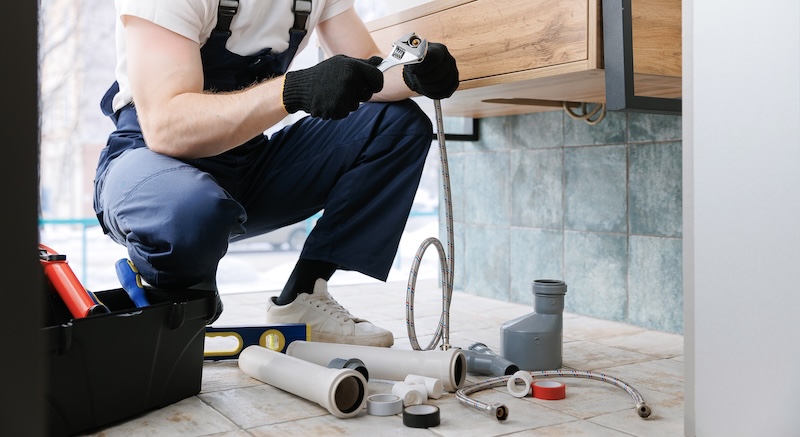
A large percentage of bathroom products that end up in skips are not actually beyond repair. In many cases, a simple cartridge, flush valve, hinge, seal or roller could restore the product back to full working order for a fraction of the cost.
Instead, entire toilets, taps, shower enclosures and furniture units are frequently removed because the correct spare part cannot be found quickly enough. This creates several problems:
• Large volumes of landfill waste
• Increased manufacturing demand
• Higher transport emissions
• More pressure on raw materials
• Rising costs for consumers and businesses
Repair as the first option
The industry needs to shift its mindset from replacement-first to repair-first.
In many other sectors, repairing products is actively encouraged. Cars are repaired. Boilers are repaired. Commercial machinery is repaired. Yet within bathrooms, replacing complete products has somehow become the norm.
Part of the issue is convenience. Replacing an item can sometimes appear easier than diagnosing the fault. However, this short-term thinking often creates unnecessary expense and waste.
For example, replacing a complete concealed cistern because of a failed flush valve could cost hundreds once labour, tiling and installation are factored in. Replacing the internal flush mechanism may cost a small fraction of that and avoid major disruption to the property.
The same applies to taps, showers and toilet seats. Often, a tiny component is the actual cause of failure, not the entire product itself.
Role of spares
One of the biggest drivers of sustainability within bathrooms is the spare parts sector.
The ability to identify, source and replace individual components keeps products functioning for longer and prevents unnecessary disposal. This is especially important for commercial buildings, hotels, schools and landlords where maintenance costs can escalate quickly.
Manufacturers also have a major responsibility. Products should be designed with future servicing in mind. Spare parts should remain available for reasonable periods, and technical information should be easier to access.
If manufacturers stop supporting products after only a few years, it almost forces unnecessary replacement, which contradicts the sustainability messaging many brands now promote.
Consumer mindset
With the rising cost of living, homeowners are becoming more conscious about avoiding unnecessary spending. Many are now actively looking for ways to repair rather than replace.
At the same time, sustainability is becoming part of mainstream buying behaviour. Customers increasingly want products that are repairable, long-lasting and supported with spare parts. This creates an opportunity for the bathroom industry to evolve.
Businesses that focus on longevity, after-sales support and sustainability are likely to gain trust over companies that simply encourage constant replacement cycles.
Forward momentum
The bathroom industry cannot continue operating with a throwaway mentality if it wants to remain sustainable long term.
Repairing products instead of automatically replacing them reduces waste, lowers costs and helps preserve valuable materials and resources. It is better for homeowners, better for businesses and better for the environment.
The future of the industry should focus on smarter maintenance, better technical support, longer-lasting products and accessible spare parts, not filling skips with products that still have years of life left in them.
Sustainability in bathrooms is not just about water-saving taps or eco-friendly packaging. Sometimes, the most sustainable product is the one you do not throw away in the first place.